Why Is Outdoor Security Lighting Important?
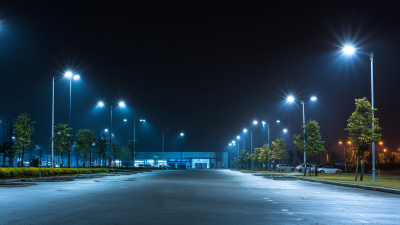
Outdoor Security Lighting can make a driveway easier to navigate, reveal steps and entrances, and help residents notice activity around their homes. Its value is not simply brightness. A well-aimed fixture can illuminate a gate or side path while limiting glare through a bedroom window. A poorly placed one may leave deep shadows—or shine directly into a neighbor’s yard. Small details matter.
Urbanist Jane Jacobs captured a related safety principle in The Death and Life of Great American Cities: “There must be eyes upon the street, eyes belonging to those we might call the natural proprietors of the street.” Her observation concerns active, watched public spaces, not a lighting product. Still, it helps explain why lighting works best as part of a broader approach: visible entrances, clear sightlines, and regular human presence. A lamp alone cannot guarantee safety.
Effective Outdoor Security Lighting starts with the actual setting. Walk the property after dark. Notice where a visitor might miss a step, where a camera’s view fades, or where a motion sensor may trigger repeatedly from passing cars. Choose fixtures and controls suited to those conditions, and check them over time. This can take a little patience. The right solution is not always the brightest one, and that deserves a second look. In this guide, we’ll examine how outdoor lighting can improve visibility, support safer movement, and avoid common design mistakes.
What Outdoor Security Lighting Is and How It Works
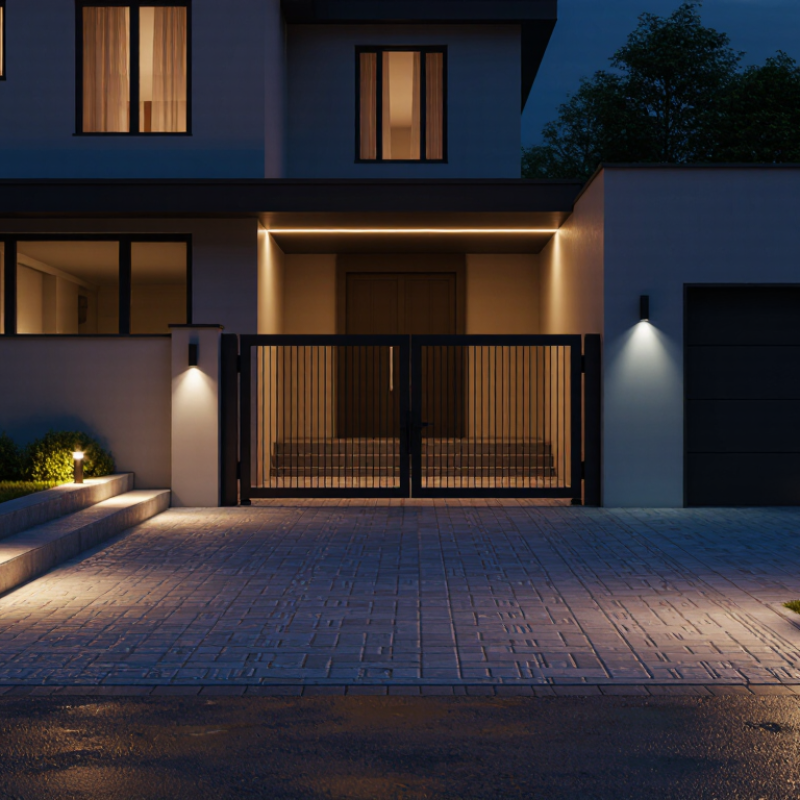
Outdoor security lighting uses visible light to make entrances, paths, and dark corners easier to see. A dusk-to-dawn photocell switches a fixture on when daylight fades. A motion sensor, often passive infrared, detects changes in heat as a person or animal moves nearby, then turns the light on for a set period. Some systems combine both controls, so the lamp stays off during bright hours and responds to movement at night. Placement matters: a sensor aimed at a warm driveway or moving branches may trigger repeatedly. One caveat: more light is not always better. Glare can hide details and spill into neighbors’ windows.
The U.S. Department of Energy reports that residential LEDs use at least 75% less energy and last up to 25 times longer than incandescent lighting. That can make regular overnight use more practical, though actual savings depend on wattage and operating hours. A UK Home Office review of street-lighting studies reported a 21% reduction in crime in reviewed UK areas. Street lighting is not the same as a home security fixture, so this figure should not be treated as a guarantee for one property.
Tips: Aim the beam down toward doors and steps, not eye level. Test the sensor after dark, then adjust its range and timer. Keep lenses clean. A small shadow may remain; check the view from the path, not only from indoors.
How Lighting Improves Visibility and Discourages Intruders
Outdoor lighting makes familiar spaces easier to read after dark. A clear view of a front step, side gate, or driveway helps residents spot hazards before reaching them. Good placement matters. Light near entrances can reveal faces and movement. A beam across a path can expose uneven paving or a dropped package.
Consistent illumination can make hidden approaches less comfortable for intruders. A lit doorway or rear passage is harder to use unnoticed than a deep, unlit corner. Motion-activated lights can draw attention when someone enters their detection range. They may also switch on for a cat, wind-blown branches, or passing traffic. That can become annoying. Aim fixtures downward and away from neighbors’ windows to limit glare, which can make useful details harder to see.
Walk the property after sunset and check for dark gaps between lights. Overlapping coverage can help, but flooding every corner with bright light is not always better. Harsh lighting may create deep shadows beyond its reach. Not brighter, just smarter. Replace bulbs that flicker, keep lenses clean, and test motion sensors from the paths people actually use. It is easy to miss a side entrance when checking only from the front door.
Common Types of Outdoor Security Lights
Outdoor security lighting comes in several forms, each suited to a different space. Motion-activated lights brighten a driveway, side gate, or path when their sensors detect movement. They can conserve energy and draw attention, though pets or swaying branches may trigger them. Aim sensors carefully. Dusk-to-dawn lights use a light sensor to switch on at twilight and off at sunrise. They provide steady visibility near entrances, but stay on for many hours. Timers offer a middle ground, setting lights to operate during predictable evening hours.
Floodlights cast broad beams across yards and garages, while wall-mounted and porch lights create a more focused pool near doors. Shielded fixtures help direct light down instead of into a neighbor’s windows or a driver’s eyes. Solar lights suit sunny paths where wiring is impractical, although shade and short winter days can reduce their output. Some fixtures combine lights with cameras, but the camera’s view and the light’s coverage may not match perfectly. Check both before installation. No setup is perfect. Choose brightness for the area, not just maximum output; harsh glare can make nearby shadows harder to see.
Why Is Outdoor Security Lighting Important?
Outdoor security lighting can improve visibility around entrances, paths, and other outdoor areas. The chart compares typical light-output ranges for common types of outdoor security lights.
Typical output ranges are indicative; actual brightness varies by product, settings, and installation.
How to Choose Locations and Set Coverage
Outdoor security lighting works best when it fills specific gaps, not when it floods every surface. Walk the property after dusk and note dark routes, side doors, steps, and corners hidden by shrubs. Start with entry points and paths people actually use. Mount fixtures high enough to reduce tampering, but low enough to keep the beam on its target. Exact placement depends on the fixture and landscape. That part takes testing.
At a driveway, aim light across the approach rather than toward a driver’s eyes or a neighbor’s window. At a doorway, cover the handle and landing; at a gate, illuminate both the latch and the path beyond it. Overlap nearby beams slightly so a person does not disappear between bright pools. Too much overlap can create glare and deep shadows behind objects, so check from several angles. Motion-activated lights should detect someone approaching, not trigger constantly from branches or passing traffic. After installation, walk each route at night and watch for dark patches, reflections, and abrupt changes in brightness. Adjust one fixture at a time. Even careful placement can miss seasonal changes; shrubs grow, and stored bins shift.
Why Is Outdoor Security Lighting Important? — How to Choose Locations and Set Coverage
| Location | Why It Matters | Placement and Aim | Coverage Planning | Practical Considerations |
|---|---|---|---|---|
| Front and back entrances | Helps people see steps, locks, and entry areas, and can make unexpected activity more noticeable. | Mount above or beside the doorway and aim toward the approach, not directly into the doorway or a neighbor’s windows. | Light the door, landing, and the route leading to it. Check for shadows behind columns or nearby structures. | Use a weather-rated fixture. A motion sensor or dusk-to-dawn control can reduce unnecessary operating time. |
| Driveways and parking areas | Improves visibility for people arriving, walking to the home, or moving around parked vehicles. | Place fixtures high enough to reduce glare and aim them across the area rather than toward drivers’ eyes. | Cover the vehicle area and the walking route to an entrance; use more than one fixture if a building or vehicle creates dark zones. | Test the view from the street and from a seated driver’s position to identify glare and poorly lit approaches. |
| Side paths and narrow passages | These routes can be less visible from the street and may contain trip hazards or concealed corners. | Use wall-mounted or low-glare path lighting, positioned to illuminate the walking surface and turns. | Space fixtures so their useful light areas connect along the route, while checking for dark gaps near gates and corners. | Avoid placing lights where plants, gates, or stored items can block them as the site changes. |
| Garage doors and service entrances | Highlights commonly used access points and supports safe movement when carrying tools or belongings. | Mount to illuminate the door and the area immediately outside it; avoid aiming toward adjoining properties. | Include the approach and any steps or changes in level, not just the door surface. | Choose a fixture suitable for outdoor exposure and keep it accessible for cleaning and maintenance. |
| Perimeter corners and fence gates | Can improve visibility around access points and areas that may be hidden from the house. | Position lights to reveal the gate and nearby ground without shining continuously into neighboring yards. | Assess each corner from likely viewing positions. Trim vegetation that blocks light or creates deep shadows. | Lighting is not a substitute for secure gates, locks, or clear sightlines. |
| Stairs, slopes, and changes in level | Reduces the chance of trips and falls by making walking surfaces easier to see. | Use low-glare lighting that reveals stair edges and surface changes; avoid strong shadows across steps. | Illuminate the full set of steps or slope, including the top and bottom landing. | Keep fixtures and cables out of the walking path and follow applicable electrical and building requirements. |
| Patios and outdoor work areas | Supports safe use of the area and makes activity more visible after dark. | Place lights to illuminate work or seating zones from more than one direction when practical. | Match coverage to the task: broad, even light for work areas and lower, targeted light for circulation routes. | Use controls that fit how the space is used, such as a switch, timer, or motion sensor. |
Planning note: There is no single fixture spacing or brightness level that suits every property. Actual coverage depends on fixture output, beam pattern, mounting height, surfaces, and obstructions. Check the installed result after dark, reduce glare and light spill, and follow local codes and electrical-safety requirements.
Energy Use, Safety, and Maintenance Considerations
Outdoor security lighting matters most when it helps people see paths, entrances, and hazards without creating glare. Energy use is part of that decision. The U.S. Department of Energy’s Energy Saver guidance says LED bulbs use at least 75% less energy and can last up to 25 times longer than incandescent bulbs. Pair efficient lamps with motion sensors or timers, and lights can operate only when needed. Still, controls need sensible settings; a light switching on with every passing car wastes energy.
Good visibility is not the same as maximum brightness. Aim fixtures downward toward steps, gates, and doorways, rather than into windows or the night sky. A sharply lit patch beside a deep shadow can make details harder to judge. There is no single layout for every property, so check the view from the walkway and from inside the home. Dust, rain, and insects also reduce output. Inspect lenses and seals periodically, and replace damaged components before moisture reaches wiring.
Tips: Choose warm, efficient LEDs, shield the beam, and test motion-sensor range after installation. Wipe lenses with a soft cloth every few months. Small adjustment, real difference.
Related Posts
-
How to Identify Quality Manufacturers for Best Security Lighting: Key Industry Insights and Data
-
The Ultimate Guide to Sourcing Quality Led Luminaires for Your Business Needs
-

Innovations in Horticulture Led Technology Driving Global Market Trends for 2025
-
How to Choose the Right Light Source for Your Home and Business Needs
-

How to Choose the Best LED Lighting for Your Needs?
-
Unleashing Innovation: Unique LED Luminaires Designs for Modern Spaces