What Are the Top Types of Crystal Furniture?
Crystal furniture turns light into part of a room’s design. A clear tabletop can make a small lounge feel more open. Faceted details catch daylight, then sparkle under warm lamps. Yet “crystal furniture” describes several different looks, not one fixed category. It may mean crystal-glass tables, mirrored consoles, accent chairs with crystal details, or cabinets displaying crystal objects. Materials and construction matter: glass clarity, edge finishing, frame strength, and hardware affect both appearance and everyday use.
The market context is broad, not crystal-specific. Grand View Research valued the global furniture market at approximately US$729.3 billion in 2022 and projected continued growth through 2030. That figure includes many furniture types; it should not be mistaken for a market estimate for crystal furniture alone. Still, it helps explain why shoppers increasingly encounter varied styles, from restrained glass-and-metal pieces to richly embellished statement furniture. Pretty, but fragile. That is one impression worth examining, especially in homes with children, pets, or heavy daily use.
A useful design principle comes from William Morris, the influential designer and craftsman: “Have nothing in your houses that you do not know to be useful, or believe to be beautiful.” This guide applies that idea to the top types of Crystal Furniture, comparing their look, practical strengths, and care needs. Some pieces may suit a formal entryway better than a busy family room. The distinction is easy to overlook. Readers will find clear categories and practical details before choosing a piece that fits their space, budget, and tolerance for fingerprints.
Crystal Furniture: Definition, Materials, and Key Features
Crystal furniture describes tables, cabinets, consoles, or seating that use crystal-like materials as a visible design feature. The term can be imprecise. Some pieces contain solid crystal components, while others use cut glass, crystal ornaments, or clear panels. That distinction matters when judging weight, durability, and price.
Common materials include lead-free crystal glass, traditional leaded crystal, tempered glass, metal, and wood. Faceted surfaces bend light into small flashes, especially near a window or lamp. Clear tops can make a compact room feel more open, but they also show fingerprints and dust quickly. Metal frames add support; wood can soften the bright, formal look. Crystal is not automatically tougher than ordinary glass, and a heavy piece may still chip at an exposed corner. Still, the category can feel fuzzy, even to careful shoppers.
Tips: Check the product details for the exact material and cleaning guidance. Run a hand near the edges without pressing hard; rough seams may signal a poor finish. Use a soft, lint-free cloth and mild cleaner. Handle with care. Avoid placing crystal furniture where doors or busy walkways may knock against it.
Crystal Tables: Dining, Coffee, and Side Table Designs
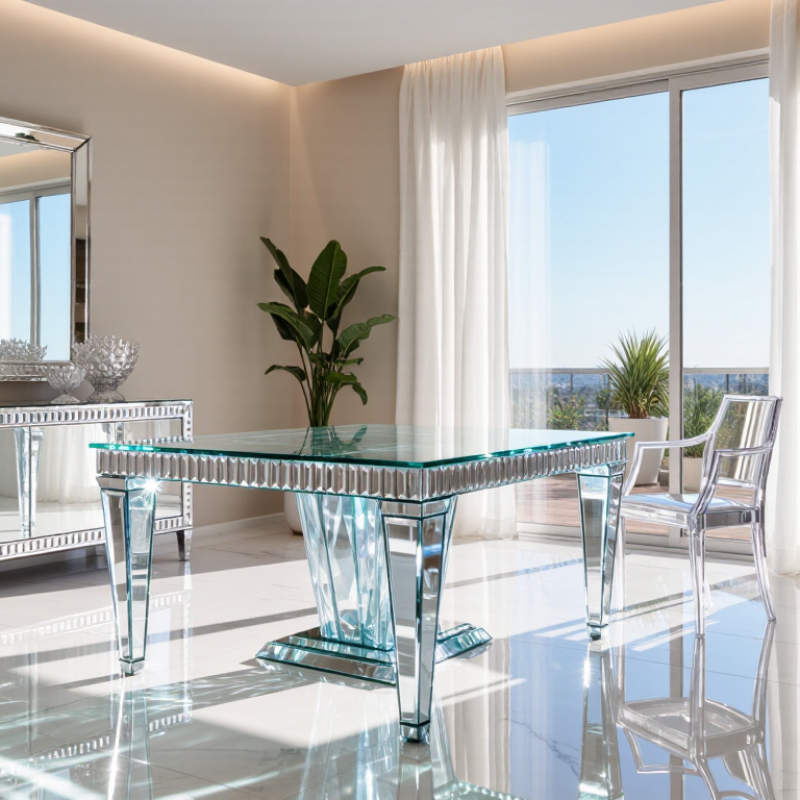
Crystal dining tables often pair a clear or mirrored top with faceted crystal details on the base. The effect catches window light and keeps a formal dining room visually open. Most “crystal” designs use glass and crystal accents, not solid crystal. Check the maker’s stated load limit and edge finish before buying; a sparkling top cannot compensate for a wobbly base.
Coffee tables allow more playful shapes. A round top softens a room filled with square sofas, while a two-tier design adds space for books and remotes. Grand View Research valued the global furniture market at $766.2 billion in 2023 and projected 5.9% annual growth through 2030. This broad market estimate does not measure crystal tables specifically, but it shows the scale of the furniture sector. Keep the table low enough to reach comfortably. Fingerprints show quickly. Not effortless.
Crystal-accented side tables suit narrow spaces beside a sofa or bed. Look for a stable footprint, smooth corners, and a finish that tolerates regular wiping. A clear top can make a small room feel lighter, but it may reveal dust more readily than wood. That trade-off is easy to underestimate. Grand View Research, “Furniture Market Size, Share & Trends Analysis Report,” 2024.
What Are the Top Types of Crystal Furniture? - Crystal Tables: Dining, Coffee, and Side Table Designs | Table type | Typical dimensions | Common tabletop and base | Best suited for | Practical considerations |
| Dining table | Rectangular: about 150–240 cm long × 85–110 cm wide; height commonly 74–76 cm | Tempered glass top with a metal, wood, or stone base; “crystal” commonly describes the clear, polished glass appearance | Dining rooms and open-plan spaces where a visually light surface is desirable | Check seating clearance and support under the glass. Use placemats or coasters to reduce scratches and water marks. |
| Coffee table | Often 90–130 cm long × 50–70 cm wide; height commonly 35–45 cm | Clear or tinted glass top, sometimes paired with a lower shelf; bases may be metal or wood | Living rooms, positioned in front of a sofa for drinks, books, and everyday items | Allow comfortable walking space around the table. Rounded edges can be a useful choice in busy households. |
| Side table | Typically 35–60 cm wide or in diameter; height often 45–65 cm, depending on the adjacent seat | Small glass top on a compact metal, wood, or stone base; may include a shelf or sculptural support | Beside sofas, armchairs, or beds for a lamp, book, phone, or drink | Choose a height close to the seat arm or mattress for convenient reach. A stable base helps prevent tipping. |
| Dimensions are typical examples, not fixed standards; actual sizes and materials vary by design. In furniture descriptions, “crystal” often refers to the clear, reflective look of glass rather than a tabletop made from natural crystal. |
Crystal Seating: Chairs, Benches, and Stools
Crystal seating turns light into part of the design. Chairs often use clear, molded acrylic or polycarbonate; “crystal” usually describes the glass-like finish, not solid mineral crystal. Their transparency can make a compact dining area feel less crowded, while faceted edges catch daylight like cut glass. A bench offers a longer, sculptural line in an entryway, but its hard surface may feel cold during long waits. Stools are easier to move beside a kitchen island or dressing table. Not every room needs one.
Material and proportions matter more than sparkle. Check the chair’s weight limit, stability, edge finish, and cleaning instructions; scratches and fingerprints show quickly on clear surfaces. For regular use, compare seat height with the table and look for a shaped seat or cushion.
Grand View Research’s 2024 global furniture market report estimated the market at $677.09 billion, a broad industry measure rather than a figure for crystal seating. It signals a large furniture sector, but cannot tell you whether a transparent chair will suit your room. That distinction is easy to miss.
I’d also test a stool before buying: a striking silhouette can still be awkward after ten minutes.
Crystal Storage Furniture: Cabinets, Consoles, and Shelving
Crystal storage furniture turns reflective surfaces into useful features. Cabinets with glass or crystal-look doors can protect stemware, books, or folded linens while keeping them visible. Mirrored backs may brighten a dim corner, but fingerprints show quickly. Dust shows. Place frequently handled items on lower shelves, away from door edges.
Consoles work well in narrow hallways and dining rooms. A slim drawer can hold keys or napkins, while a sturdy frame helps the top feel secure. Check the door swing, drawer depth, and stated shelf-load limit before buying. These details are easy to miss. For glass shelves, confirm whether the panels are tempered and whether replacements are available.
Open shelving lets light pass through, but it also puts clutter on display. Keep heavier objects near supports and avoid loading the center heavily.
Grand View Research valued the global furniture market at USD 541.52 billion in 2023. Its Furniture Market Size, Share & Trends Analysis Report projected a 5.9% compound annual growth rate from 2024 to 2030. This broad estimate is not specific to crystal furniture. It signals market scale, not guaranteed demand.
A slightly uneven arrangement can look more lived-in than a perfectly staged shelf—and sometimes that feels better.
Crystal Accent Pieces: Desks, Vanities, and Decorative Stands
Crystal accent furniture works best when its sparkle has room to breathe. A crystal desk can brighten a study, especially beside a matte wall and a simple task lamp. Choose a clear, stable top with rounded edges, and check that the frame does not wobble. Keep daily items in a drawer or tray; scattered cables quickly dull the effect. A little restraint helps.
For vanities, crystal knobs or a faceted stool add shine without making the whole corner feel formal. Place the mirror where daylight reaches it, and use a soft cloth to keep fingerprints visible only briefly. Decorative stands suit entryways and living rooms: a narrow crystal-legged table can hold a small bowl or one sculptural object. Avoid loading delicate-looking shelves with heavy books. The 2024 U.S. Houzz & Home Study reported median renovation spending of $24,000 in 2023, a useful reminder that furnishings sit within wider room budgets—not a crystal-furniture price guide. Crystal pieces can also feel cold or overly precious. That is worth considering before buying.