
What Are the Top Types of Brass Pipe?
Brass Pipe products are often grouped by alloy, temper, and intended service, yet those labels can hide important differences. A thin-wall tube for an instrument line is not interchangeable with a heavy-wall pipe for a threaded connection. The right choice depends on pressure, temperature, fluid chemistry, joining method, and the applicable product specification. Small details matter: a fitting that looks compatible may still use a different alloy or dimensional standard.
The U.S. Geological Survey’s Mineral Commodity Summaries 2025 estimated global copper mine production at about 23 million metric tons in 2024. That figure offers useful context for copper supply, but it does not measure brass-pipe output or demand. Technical references from the Copper Development Association and relevant ASTM specifications are more useful when comparing alloy families and product requirements. Common distinctions include lead-free and leaded brasses, as well as red and yellow brass compositions. Each has trade-offs in machinability, corrosion behavior, and suitability for a particular system. A material label alone is not enough.
This guide examines the top types of Brass Pipe and the practical differences buyers should check before specifying one. I cannot responsibly attribute a quotation to a named brass-pipe expert without a verifiable source. That gap matters; a confident-sounding quote is not evidence. The comparisons here should be checked against current manufacturer data and project specifications.
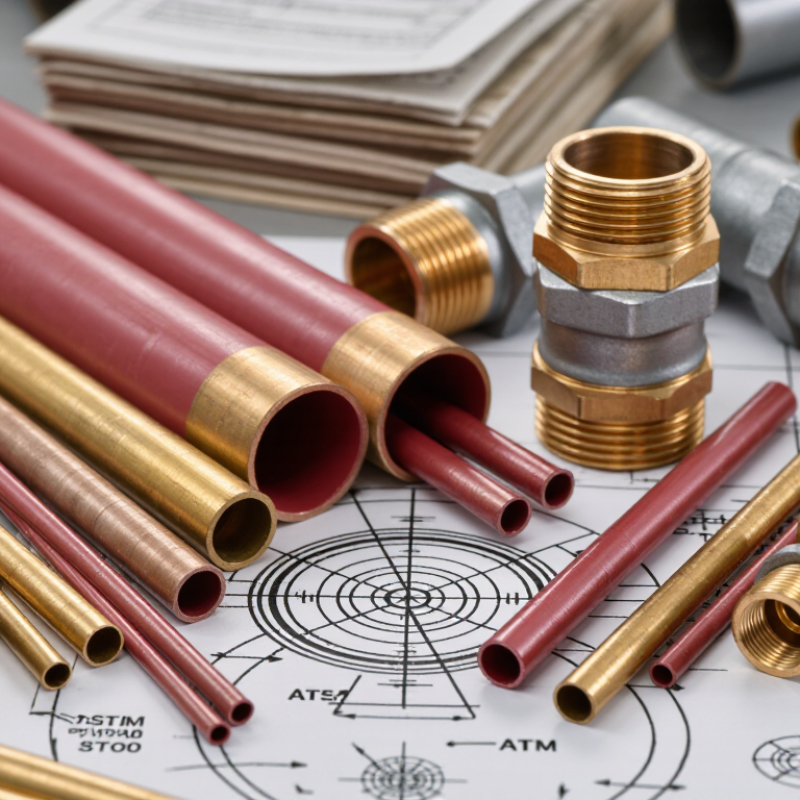
How Brass Pipes Are Classified by Alloy and Manufacturing Method
Brass pipe is classified by both alloy chemistry and how the metal is formed. Copper Development Association alloy data lists C26000, or 70/30 brass, at 68.5–71.5% copper, with zinc making up most of the remainder. Its high copper content supports forming and drawing, making it useful for fittings and fluid lines. C46400 naval brass contains 59–62% copper and 0.5–1.0% tin, according to the same data. That tin improves resistance to saltwater exposure. Details matter. Alloy names alone do not guarantee performance; wall thickness, water chemistry, and temperature also affect service life.
Manufacturing changes the structure and the inspection needs. Seamless products are commonly formed by extrusion and drawing, which create a continuous wall without a welded seam. Welded products start as shaped strip joined along a longitudinal seam; seam quality and testing requirements depend on the product specification. ASTM B135/B135Mcovers seamless Brass Tube, whileASTM B43 addresses seamless red-brass pipe. These standards define different product requirements, so “pipe” and “tube” should not be treated as interchangeable purchasing terms. A catalog may blur that distinction. It is worth checking the alloy designation, dimensions, and stated standard before comparing products.
Yellow Brass Pipe: Composition, Properties, and Common Uses
Yellow brass pipe is an alloy made mainly from copper and zinc. Many common grades contain roughly 60 percent copper and 40 percent zinc, though proportions vary by specification. Its golden color is recognizable, but appearance alone cannot confirm the grade. Check the material certificate. Copper contributes corrosion resistance, while zinc adds strength and helps control cost. Yellow brass is also workable and can be cut, threaded, or joined with compatible fittings. It is not indestructible.
Yellow brass pipe is used in water plumbing, low-pressure service lines, and some equipment connections. Its smooth interior can support steady flow, and its machinability helps installers make precise threaded ends. A fitting may look sound outside while water chemistry gradually affects the metal inside. That matters. Acidity, chloride levels, temperature, and stagnant water can influence corrosion or dezincification, so check the alloy grade against the intended service. For an installation, verify pressure and temperature ratings, connection compatibility, and applicable plumbing requirements. Brass is convenient, but it is not automatically the right choice for every fluid or environment. A small specification detail can change the outcome.
What Are the Top Types of Brass Pipe? — Yellow Brass Pipe: Composition, Properties, and Common Uses
| Category | Brass Type or Feature | Typical Composition or Characteristics | Common Uses and Practical Notes |
|---|---|---|---|
| Brass pipe types | Yellow brass | Generally contains about 60–70% copper, with zinc making up most of the balance. Exact composition depends on the alloy and product specification. | Used in plumbing components, valves, fittings, instrument parts, and other applications requiring formability and corrosion resistance. Confirm suitability for the fluid, pressure, and applicable codes. |
| Brass pipe types | Red brass | A copper-rich brass family, commonly around 85% copper and 15% zinc; commercial grades may contain additional elements. | Found in some water-service fittings, valves, and specialty plumbing components. “Red brass” is a broad trade description, so check the product’s alloy designation. |
| Brass pipe types | Naval brass | Typically a copper-zinc alloy with a small tin addition; one common composition is approximately 60% copper, 39% zinc, and 1% tin. | Chosen for certain marine and hardware applications where improved resistance to seawater-related corrosion is useful. Performance depends on exposure and design conditions. |
| Brass pipe types | Leaded or free-machining brass | Brass grades designed for easier machining may contain lead. Lead-free alternatives use different alloying strategies and have separate composition limits. | Often used for machined fittings and valve components. Do not assume a brass product is suitable for drinking-water contact; check lead-content rules and relevant approvals. |
| Composition | Representative yellow brass alloy | C26000 cartridge brass is a common 70/30-type alloy, with copper typically specified at 68.5–71.5% and zinc comprising most of the remainder. | This is an example alloy, not a universal specification for yellow brass pipe. Product chemistry should be verified against its material certificate or standard. |
| Physical properties | Appearance and density | Usually golden-yellow in color. Brass density is commonly around 8.4–8.7 g/cm³, varying with alloy composition. | Color can help identify a material informally, but it is not a reliable substitute for material testing or documentation. |
| Physical properties | Formability and machinability | Yellow brass is generally workable and can be formed or machined; behavior varies with alloy, manufacturing process, and temper. | Useful for components with formed shapes, threaded connections, or accurately machined features. Select the grade and temper for the fabrication method. |
| Performance | Corrosion resistance | Brass often resists corrosion in many indoor and water-service environments, but performance depends on the alloy, water chemistry, temperature, and flow conditions. | Some brasses can suffer dezincification in susceptible environments. Specify a dezincification-resistant grade where required by the service conditions or local standards. |
| Common uses | Plumbing and fluid-handling components | Brass is commonly used for fittings, connectors, valves, and selected tubing or pipe products. | Check pressure and temperature ratings, compatibility with the conveyed fluid, joining method, and applicable plumbing or building codes before installation. |
| Selection | Product verification | “Brass pipe” can refer to products with different alloys, dimensions, wall thicknesses, and manufacturing standards. | Confirm the alloy designation, dimensions, pressure rating, lead status, and required certifications from the product specification rather than relying on color or a generic type name. |
Note: Composition and performance figures are representative. Actual values and approved uses depend on the specific alloy, product standard, manufacturing condition, and local regulations.
Red Brass Pipe: Composition, Properties, and Common Uses
Red brass pipe is commonly associated with C23000, a copper-zinc alloy often called 85/15 brass. The Copper Development Association’s C23000 alloy data gives a composition of 84–86% copper and 14–16% zinc. That high copper share gives the metal its warm, reddish color. It also supports good resistance to corrosion in many water-service environments. Not indestructible, though. Water chemistry and installation details still matter.
Red brass is used in plumbing lines, fittings, and other low-pressure water applications. Its copper-rich composition makes it more resistant to dezincification than some higher-zinc brasses, where zinc can leach from the metal. The Copper Development Association’s alloy data identifies C23000 as having good corrosion resistance and formability. ASTM B43 covers seamless red brass pipe, including its dimensions and requirements. In practice, check the pipe’s grade and specification rather than relying on color alone. Two pipes can look nearly identical. One detail worth questioning is whether a project needs red brass at all; its material cost may be hard to justify where service conditions are mild and another approved material performs adequately.
Naval and Admiralty Brass Pipe: Marine Applications
Naval and admiralty brass are copper-zinc alloys used in marine heat exchangers and condenser tubing. Their tin content helps improve resistance to seawater corrosion, though neither alloy is immune to damage. Saltwater is unforgiving.
The Copper Development Association lists naval brass C46400 at 59–62% copper and 0.5–1.0% tin. Admiralty brass C44300 contains 70–73% copper and 0.9–1.2% tin. Zinc makes up most of the balance in both alloys. These composition ranges help engineers distinguish the grades, but they do not guarantee service life.
ASTM B111/B111M covers seamless copper-alloy condenser tubes, including admiralty brass tubing. In practice, these tubes carry seawater through condensers, where warm surfaces and flowing water can expose weaknesses in material selection or maintenance.
Naval brass may suit marine fittings and components that need strength, while admiralty brass is commonly specified for heat-transfer tubing. The right choice depends on water chemistry, temperature, flow, and the equipment design. I would not choose a grade from its name alone.
Check the applicable material specification, inspect for erosion and dezincification, and confirm compatibility with adjacent metals. Even sound alloy data cannot replace site-specific engineering review.
Sources: Copper Development Association, C46400 and C44300 alloy data; ASTM B111/B111M, Standard Specification for Seamless Copper and Copper-Alloy Condenser Tubes and Ferrule Stock.
Seamless and Welded Brass Pipe: Key Differences
What Are the Top Types of Brass Pipe?
Seamless and Welded Brass Pipe: Key Differences
Seamless brass pipe starts as a solid billet, which is heated and pierced before being drawn to size. It has no longitudinal weld seam, making it a practical choice when pressure or leak risk matters. That does not make every seamless pipe stronger in every situation. Alloy, wall thickness, workmanship, and operating conditions still count.
Welded brass pipe is formed from flat brass strip, rolled into a tube, then joined along its length. It can offer consistent dimensions and efficient production, often at a lower cost. The weld is the critical detail. Inspect it for uniformity, and check that the pipe’s specifications suit the fluid, temperature, and pressure. A neat-looking seam alone proves little.
In practice, a visible seam may help identify welded pipe, but finishing can make it hard to spot. That can be frustrating. Ask for manufacturing details and relevant test documentation rather than relying on appearance. For a short, low-pressure plumbing run, welded pipe may be entirely adequate; a demanding installation calls for closer review of the grade and design requirements.
