
What Are the Top Red Light Therapy Manufacturers?
Choosing a Red Light Therapy Manufacturer takes more than comparing polished product photos or headline claims. The real questions sit inside the specifications: wavelength, irradiance, treatment area, dose guidance, and consistency between devices. Dr. Michael Hamblin, a researcher in photobiomodulation, has highlighted the importance of light parameters and dosage in this field. His work offers a useful reminder: details matter. A red glow alone does not explain how a device is designed or what its evidence supports.
This guide looks at manufacturers through practical criteria, including product range, technical transparency, quality controls, and access to credible support. A dependable company should explain how its device is intended to be used and provide specifications that buyers can assess. Clear documentation helps. So does a support team that answers specific questions, rather than repeating marketing language. Not every detail is easy to compare, and some public claims may leave important gaps. That deserves a closer look.
The manufacturers discussed here represent different approaches to design, distribution, and customer needs. The aim is not to promise results or declare one brand universally best. It is to help readers ask sharper questions before choosing equipment. Small print counts. So does the evidence behind a claim. A careful comparison can reveal strengths, limitations, and unanswered questions—because, honestly, no shortlist can replace checking the details yourself.
What Red Light Therapy Manufacturers Produce
What Are the Top Red Light Therapy Manufacturers?
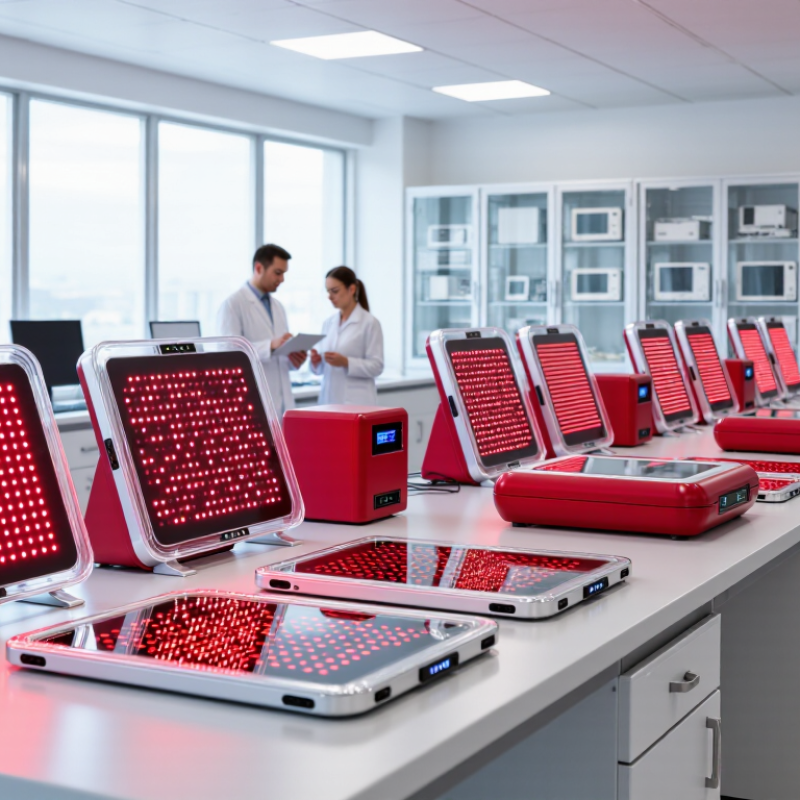
Red light therapy manufacturers produce more than glowing panels. Their product lines can include tabletop devices, floor-standing panels, handheld units, face masks, and full-body systems. Some combine red and near-infrared LEDs, while others offer one wavelength range. Controls may include adjustable intensity, timed sessions, cooling fans, or a simple power switch. Small details matter. A stable stand, clear labels, and an easy-to-clean surface can make a device more practical in daily use.
Manufacturers may also design circuit boards, assemble LED arrays, test electrical components, and prepare user instructions. Some build products for other companies rather than selling directly to consumers. Product specifications deserve careful attention: wavelength, measured output, treatment distance, and testing methods should be stated clearly. Numbers without test conditions can be hard to compare. That distinction is easy to miss. Manufacturing quality can also depend on consistent component checks and documented inspection procedures. Still, product categories and measurements are not always presented in the same way. Buyers should check whether claims are supported by usable technical details, and whether the device carries relevant safety documentation for its intended market. A polished casing alone proves little.
How Manufacturers Are Evaluated for Quality and Reliability
A credible red light therapy manufacturer should provide testable evidence, not just polished product images. Ask for measured wavelength ranges, irradiance readings, and the distance used during testing. A reading taken directly at the panel may differ greatly from one taken 30 centimeters away. Numbers need context. Clear manuals should explain setup, recommended distance, session timing, and basic safety precautions without promising medical outcomes.
Quality checks should extend beyond the specification sheet. Look for documented inspections of finished units, consistent production records, and testing for electrical and thermal safety. Independent laboratory reports can add confidence, but check that they describe the actual model being sold. Small details matter: a loose cable, uneven light output, or a confusing control panel can affect daily use. That matters. Warranty terms and access to replacement parts also offer clues about long-term support. Still, paperwork has limits; a strong report cannot guarantee every unit will perform identically. Evaluators should note what remains unclear, including missing test conditions or vague claims. A little uncertainty is honest. It is better to flag a gap than to treat impressive numbers as proof of dependable quality.
Leading Red Light Therapy Manufacturers and Their Product Categories
Red light therapy manufacturers typically organize their products around treatment area and setting. Handheld devices target small spots, while flexible wraps fit around knees, shoulders, or backs. Face masks provide closer coverage across the cheeks and forehead. They are easy to store, though fit and comfort can vary between users.
Panels are a common category, ranging from compact tabletop units to larger wall-mounted systems. Some combine red and near-infrared light, often using wavelengths around 630–660 nm and 810–850 nm. Larger panels can cover more skin at once, but they need clear instructions on distance and session duration. More light does not automatically mean better results. Details matter.
When comparing manufacturers, check the stated wavelength, measured output, cooling design, and eye-safety guidance. Look for test reports that explain how and where performance was measured. A tidy product page is not proof of reliable output. Some claims can sound more certain than the evidence supports. Honestly, specifications are easy to misread. Ask whether the device suits the intended area, and whether replacement parts and clear user instructions are available.
How Safety Standards Influence Device Design
Safety standards influence red light therapy devices long before they reach a treatment room. Manufacturers must consider electrical insulation, heat, optical output, and exposure time during design. These choices affect the shape of the housing, ventilation slots, lens materials, and control buttons. Small details matter. A casing that stays cool during a session can reduce discomfort and help prevent accidental burns.
Reliable design also depends on measured light output. Testing can check whether wavelengths and irradiance match the product’s stated specifications. Clear instructions should explain recommended distance, session length, and eye protection when appropriate. Timers and automatic shutoff features can limit unintended use. A careful manufacturer documents these checks and uses consistent quality controls across production batches, rather than relying on a single prototype.
Standards differ by market, and meeting a safety requirement does not prove that a device will work equally well for every person. That distinction is easy to blur in product descriptions. Not always elegant. More sensors, shielding, or protective eyewear may increase cost or make a device less convenient, but removing them for a cleaner design can create avoidable risks. Buyers can look for traceable testing information, readable warnings, and practical instructions—not just polished claims. A standard is a useful baseline, not a substitute for thoughtful use or independent clinical evidence.
Common Red Light Therapy Wavelength Bands
These representative wavelength ranges are commonly used in photobiomodulation devices; they are not limits prescribed by safety standards. Safety requirements influence design through photobiological risk assessment, exposure controls, electrical protection, and thermal management. Applicable standards can include IEC 62471 and, for relevant medical electrical equipment, IEC 60601-1.
How to Compare Manufacturers for Different Therapy Needs
When comparing red light therapy manufacturers, start with the intended use, not the brightest-looking device. A small panel may suit a focused area, while a larger unit can cover the back or legs. Check the stated wavelengths and irradiance, and ask how irradiance was measured, including the distance from the device. Numbers without test conditions are hard to compare. Details matter.
Look for clear instructions on session length, positioning, eye protection, and cleaning. A dependable manufacturer should provide accessible technical documents, realistic product claims, and responsive support. Ask whether safety testing applies to the complete device, not just its individual parts. For clinical use, examine the quality and relevance of supporting research; results from one device or population may not transfer neatly to another. That distinction can be easy to miss.
Tips: Match coverage to the body area you plan to treat. Compare measurements taken at the same distance, and check warranty terms and replacement-part availability. If a specification remains unclear, ask for written clarification before buying. A little uncertainty is normal, but vague answers deserve a second look.
What Are the Top Red Light Therapy Manufacturers? - How to Compare Manufacturers for Different Therapy Needs
| Therapy need | Common device format | Common wavelength options | Manufacturer capabilities to compare | Useful verification and questions |
|---|---|---|---|---|
| Small-area skin care For targeted facial or localized skin applications. | Handheld devices, masks, or compact panels; treatment area and fit should match the intended body site. | Red light commonly falls around 630–660 nm. Some devices also include near-infrared light. | Consistent LED placement, comfortable materials, reliable timers, and production checks for light output across the treatment area. | Request wavelength specifications and irradiance measurements at the stated treatment distance. Ask how output uniformity and electrical safety are tested. |
| Localized muscle or joint applications For use on a particular area, such as a knee, shoulder, or back. | Flexible wraps, contact devices, or small-to-medium panels designed to position light over a defined area. | Red wavelengths around 630–660 nm and near-infrared wavelengths often around 810–850 nm are common product options; the chosen combination varies by device. | Secure positioning, heat management, dependable controls, and documented testing of output at the actual use distance. | Compare irradiance in mW/cm², treatment-area coverage, and the stated dose in J/cm². Ask whether measurements are independently verified and how they are repeated in production. |
| Large-area or full-body use For users seeking coverage across a broader body region. | Large panels or modular systems; mounting, distance, and coverage affect practical use. | Many products combine red light around 630–660 nm with near-infrared light around 810–850 nm. | Panel-level quality control, thermal design, stable mounting options, and testing for output consistency across the illuminated area. | Request irradiance maps at multiple points and distances—not only a peak value. Confirm power requirements, operating temperature, warranty terms, and replacement-part support. |
| Clinic or professional setting For organizations requiring documented processes and support. | Panels, carts, or application-specific systems with controls and documentation suited to the intended use. | Wavelengths depend on the device design and intended use; commonly marketed red and near-infrared bands should be verified from technical documentation. | Traceable quality processes, service and maintenance procedures, user documentation, and support for applicable market requirements. | Check whether ISO 13485 quality-management certification and relevant IEC testing apply to the product and market. Regulatory status is device- and claim-specific; registration alone is not the same as clearance or approval. |
| Research or product-development use For teams that need configurable products or repeatable measurements. | Custom panels, prototypes, or systems with adjustable settings and measurement access. | Specify the required wavelengths and bandwidths in the product brief; do not rely only on broad labels such as “red” or “infrared.” | Engineering support, documented component changes, calibration options, and repeatable manufacturing and testing procedures. | Request spectral and irradiance test reports, measurement methods, tolerance limits, and change-control procedures. Confirm that measured values are reported for the finished device and a defined distance. |
Comparison note: These are common product formats and wavelength ranges, not a ranking of manufacturers or a guarantee of clinical effectiveness. Specifications and applicable regulatory requirements vary by device, intended use, and market.
