
Top 10 Police LED Lightbar Manufacturers for Global Buyers
Police Led Lightbar selection is no longer a simple catalogue exercise. Global buyers must compare optical output, warning patterns, durability, electronics, and after-sales support. A bright bar may still create uneven coverage, excessive glare, or difficult maintenance.
Industry research supports this shift toward LED systems. MarketsandMarkets’ Automotive Lighting Market report identifies LED adoption, energy efficiency, and connected vehicle technologies as major market drivers. Grand View Research also reports continued growth in automotive lighting, supported by improved LED performance and declining component costs. These findings matter for police fleets, where vehicles often operate for long hours in rain, dust, vibration, and extreme temperatures.
Standards matter.
SAE J845 provides a useful reference for emergency warning lamps in North America. UNECE Regulation No. 65 is relevant for buyers evaluating products intended for applicable European markets. However, certification claims require careful verification. A manufacturer’s brochure is not independent proof. Buyers should request test reports, photometric data, EMC documentation, ingress protection details, and production quality records such as ISO 9001 evidence.
This guide reviews ten Police LED Lightbar manufacturers serving international buyers. The evaluation considers engineering experience, lens design, controller compatibility, warranty terms, customization capability, and distributor support. It also examines practical details, including cable routing, mounting hardware, thermal management, and replacement parts.
No ranking is universally perfect. Fleet priorities differ.
A rural patrol unit may value long-range visibility, while an urban department may need compact dimensions and controlled side illumination. Some manufacturers communicate clearly; others leave important specifications unclear. That weakness deserves attention. Global buyers should confirm regional requirements, installation procedures, and service capacity before approving any purchase.
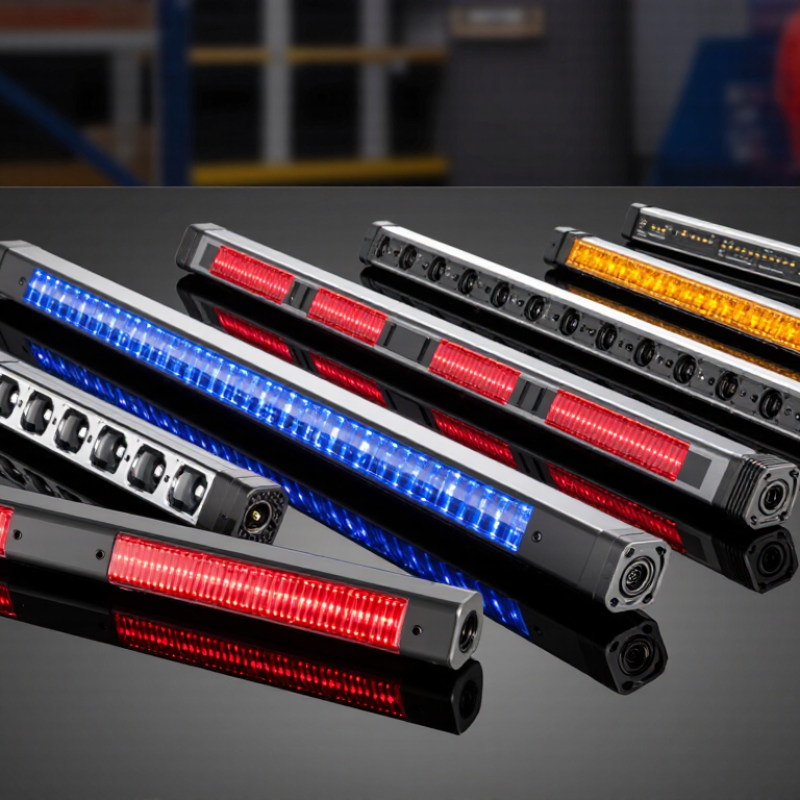
What Police LED Lightbars Are and How They Work
What Police LED Lightbars Are and How They Work
Police LED lightbars are roof-mounted warning systems that combine high-intensity LEDs, optics, control circuits, and protective housings. Unlike older halogen units, LEDs produce light through electronic semiconductors. They use less power, respond instantly, and usually last longer under regular operation. The result is immediate.
Inside the bar, a controller sends timed electrical pulses to different LED modules. Lenses shape these pulses into focused or wide beams. Rotating patterns, alternating flashes, and directional sections improve visibility from the front, sides, and rear. Amber, blue, red, or white outputs may be selected according to local requirements and vehicle use. A sealed aluminum frame helps manage heat, while gaskets protect the electronics from rain, dust, and vibration.
Experienced installers check more than brightness. They examine thermal performance, waterproof construction, wiring quality, mounting strength, and control compatibility. A bright bar is not automatically a reliable bar. Poor heat dissipation can reduce LED life, even when the light looks impressive during a short demonstration. Small details matter.
Global buyers should request photometric data, ingress protection testing, operating temperature ranges, and quality-control records. They should also confirm regional certification and color restrictions before purchasing. In field inspections, loose fasteners and badly routed cables appear surprisingly often. These issues are preventable, but they show why installation deserves the same attention as product selection. A test bench cannot fully reproduce vibration, weather, or daily vehicle use.
| No. | Manufacturer Profile | Lightbar Type | Typical System Voltage | LED Configuration | Common Warning Colors | Ingress Protection | Control and Operating Features |
|---|---|---|---|---|---|---|---|
| 1 | Full-size emergency-lighting specialist | Roof-mounted, full-length lightbar | 12 V DC or 24 V DC | Multiple LED modules with front, rear, and side optics | Red, blue, amber, white, or dual-color combinations | Usually IP65 to IP67 | Programmable flash patterns, cruise mode, dimming, and auxiliary input control |
| 2 | Low-profile patrol-vehicle specialist | Low-profile roof lightbar | 12 V DC or 24 V DC | Compact high-intensity LED boards arranged in linear modules | Red and blue, blue and white, amber, or mixed configurations | Typically IP65 or higher | Reduced aerodynamic height, synchronized flash patterns, and electronic polarity protection |
| 3 | Modular warning-system specialist | Configurable modular lightbar | 12 V DC, 24 V DC, or wide-input systems | Replaceable LED modules with selectable optical positions | Red, blue, amber, white, and split-color layouts | Commonly IP66 to IP67 | Field-configurable modules, multiple patterns, and compatibility with vehicle control units |
| 4 | Heavy-duty fleet-lighting specialist | Reinforced full-size lightbar | 12 V DC or 24 V DC | High-output LEDs with wide-angle side and corner coverage | Red, blue, amber, and white warning light options | Often IP67 for exposed vehicle installation | Impact-resistant housing, thermal management, memory recall, and low-voltage protection |
| 5 | Covert and discreet-lighting specialist | Low-visibility or undercover lightbar | Usually 12 V DC | Low-profile LED modules integrated into a dark or concealed housing | Blue, red, white, amber, or concealed dual-color output | Generally IP65 to IP67 | Reduced visual signature when inactive, discreet mounting, and rapid pattern switching |
| 6 | International vehicle-platform specialist | Universal roof-mounted lightbar | 12 V DC and 24 V DC compatibility | Modular LED arrays designed for different vehicle widths | Red, blue, amber, white, or region-specific combinations | Typically IP65 or IP66 | Wide voltage tolerance, international wiring options, and configurable mounting kits |
| 7 | Integrated siren-and-lighting specialist | Lightbar with integrated warning controller | 12 V DC or 24 V DC | LED modules connected to an onboard control system | Red, blue, amber, white, and combination patterns | Usually IP65 or higher | Light control, siren control, flash synchronization, and programmable auxiliary outputs |
| 8 | Special-purpose response-vehicle specialist | Compact or medium-length lightbar | 12 V DC, with selected models for 24 V DC | High-efficiency LED modules for limited roof space | Blue, red, amber, white, or mixed warning colors | Commonly IP65 to IP67 | Compact installation, high visibility, synchronized patterns, and optional work-light functions |
| 9 | Traffic and multi-agency warning-light specialist | Multi-purpose emergency and traffic lightbar | 12 V DC or 24 V DC | Forward-facing, rear-facing, corner, and takedown LED sections | Amber, red, blue, and white according to local regulations | Typically IP66 or IP67 | Traffic-directing modes, rear warning functions, takedown lights, and scene illumination |
| 10 | Custom OEM and fleet-integration specialist | Application-specific roof lightbar | 12 V DC, 24 V DC, or customized input ranges | Customer-selected LED modules, optics, and section layouts | Color selection based on jurisdiction and fleet requirements | Specified by installation environment, commonly IP65 to IP67 | Custom wiring, CAN-bus or digital-control integration, fleet programming, and serviceable modules |