
Top Machine Guarding Doors for Industrial Safety
Machine Guarding Doors help separate people from moving equipment without turning every task into a stop-and-start routine. In a busy plant, a door may protect a press, robotic cell, or conveyor transfer point. Its hinges, latch, viewing panel, and interlock all matter. A door that sticks or fails to close can weaken protection. Small details count.
A practical guiding line comes from fictional composite safety specialist Elena Ward, created for this introduction: “A guard must block access and still support safe, repeatable work.” This is an editorial statement, not a quotation from a real, independently verified expert. That distinction matters. Buyers should confirm product claims, test records, and installation requirements with manufacturers and qualified safety professionals.
This guide examines top Machine Guarding Doors for industrial safety, including hinged, sliding, and access-controlled designs. It considers frame strength, clear visibility, usable openings, and maintenance access. A clear panel can help operators inspect a process. A poorly placed handle can create a pinch point. Fit matters.
No door solves every risk. The right choice depends on the machine, task, and surrounding workflow. That can be easy to underestimate. Compare how each option handles routine access, cleaning, and fault response. Then check how it integrates with the complete safeguarding system. Good protection is practical. It must work on an ordinary shift, not just in a product photo.
How Machine Guarding Doors Protect Industrial Workspaces
Top Machine Guarding Doors for Industrial Safety
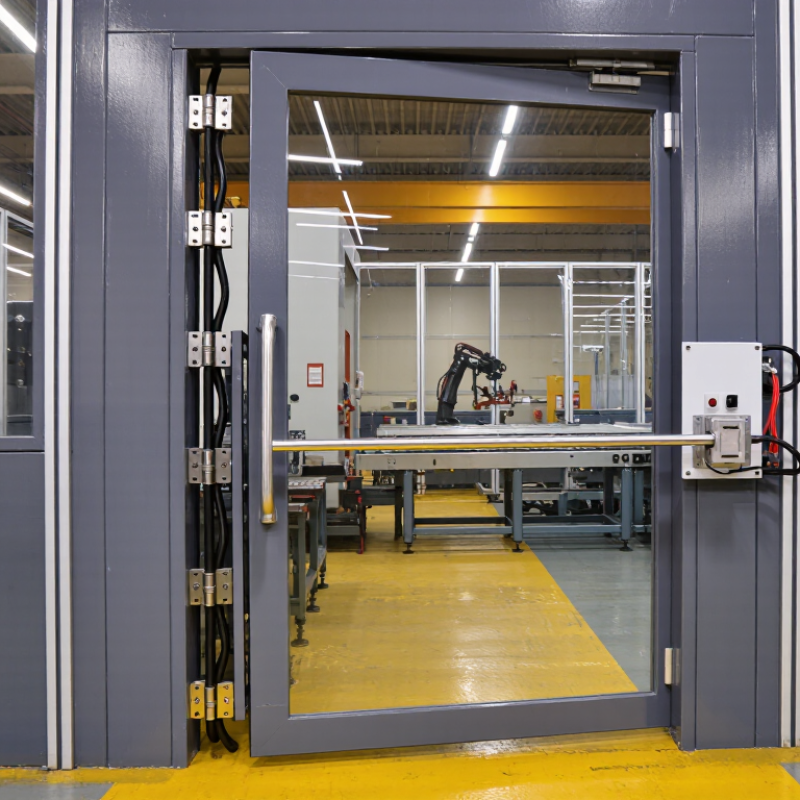
Machine guarding doors create a controlled boundary around moving equipment while allowing operators to reach designated work areas. A properly selected door can help reduce exposure to pinch points, rotating parts, and ejected materials. It also makes routine tasks, such as clearing a jam, more orderly.
Clear sightlines matter.
Door design should match the machine’s hazards and the way people use it. Sliding doors can suit narrow aisles, while hinged doors need enough swing clearance. Interlocks can stop or prevent machine operation when a guard is open, but they must be correctly selected, installed, and maintained. They are not a reason to bypass safe work procedures. During maintenance, workers should follow the site’s energy-isolation process.
Small details matter.
Look closely at the frame, hinges, latches, and viewing panels during inspections. A loose latch or cracked panel can weaken protection, even when the door still appears usable. Dust, vibration, and repeated impacts may also affect how it closes. One practical concern is that a door can slow access if the layout is poorly planned. That trade-off deserves attention during equipment design, not after operators develop workarounds.
Common Types of Machine Guarding Doors and Their Uses
Top Machine Guarding Doors for Industrial Safety
Common Types of Machine Guarding Doors and Their Uses
Hinged doors suit compact machines that need frequent access for tool changes or cleaning. They swing open like a cabinet door, so operators need clear space beside the equipment. Sliding doors work better where floor space is tight, such as beside a conveyor or machining cell. Their tracks need regular cleaning; chips can make them stick. Lift-up doors provide overhead access to presses and large enclosures, but must stay securely supported when raised. Small details matter.
Access doors should be selected around the hazard, not just the machine layout. An interlocked door can stop hazardous motion when opened, while a fixed panel may suit areas requiring little routine access. The U.S. Bureau of Labor Statistics reported 5,842 workplace amputations in 2022. That figure underscores why guarding and safe access design deserve careful review. It does not mean a door alone prevents injuries. Risk assessments should consider stopping time, reach distances, visibility, and maintenance tasks. OSHA’s machine-guarding guidance also emphasizes protecting workers from points of operation and other hazardous moving parts. A door that blocks the view may prompt workarounds; that deserves a second look.
| Door Type | How It Opens | Common Applications | Key Advantages | Safety Considerations |
|---|---|---|---|---|
| Hinged access door | Swings outward or inward on hinges. | Enclosures around presses, machining centers, conveyors, and production cells where there is room for a swinging door. | Simple access for inspection, cleaning, and maintenance; can provide a rigid physical barrier. | Allow adequate swing clearance. Where hazardous motion may continue after opening, use an appropriately selected and installed interlocking device. |
| Sliding access door | Moves horizontally along a track or guide. | Machine enclosures and work cells with limited space in front of the opening, including areas with frequent operator access. | Does not need a wide swing area and can cover a broad access opening. | Keep tracks clear and maintain suitable overlap or coverage so the opening cannot expose a hazard when the door is closed. |
| Vertical-lift door | Moves upward, often guided by rails or a counterbalanced mechanism. | Large machine openings, loading stations, and areas where floor space beside the opening is restricted. | Provides a large access opening without occupying much floor area when raised. | Assess the risk of falling or unexpected movement. Use suitable guides, supports, and interlocking where required by the risk assessment. |
| Roll-up door | Rolls into a compact overhead coil or housing. | Large industrial openings, automated production areas, and locations where a conventional hinged door is impractical. | Compact when open and suitable for wide openings or frequent passage. | Verify that the door construction provides the necessary guarding performance; a flexible curtain may not be adequate against every machine hazard. |
| Interlocked access door | May be hinged, sliding, or another door style; an interlocking device monitors its position. | Access points to machines where opening the guard must initiate a defined safety response. | Can help prevent access during hazardous operation when properly integrated into the machine’s safety-related control system. | Select the interlocking method based on the risk assessment. Consider guard locking if hazards do not stop before a person can reach them. |
| Removable guard panel | Is detached from its mounting points rather than opened on hinges or tracks. | Infrequently accessed areas, setup tasks, or maintenance access where routine entry is not needed. | Can provide a sturdy enclosure and discourage casual access to hazardous areas. | Secure the panel against unintended removal. If frequent access is necessary, a door with suitable interlocking may be more appropriate. |
| Mesh or perforated-panel door | Typically hinged or sliding, with a mesh or perforated infill. | Robot cells, conveyors, and machinery where visibility and ventilation are useful. | Allows visual monitoring and airflow while maintaining a physical barrier. | Opening size and distance from the hazard must be considered to prevent reaching through or around the guard. |
Key Safety Features in High-Performance Guarding Doors
High-performance guarding doors do more than block access. They must stay aligned, close reliably, and resist wear from repeated shifts. A door that sticks can invite workers to leave it open. That small failure can defeat the whole safeguard.
The U.S. Bureau of Labor Statistics reported 738 fatal work injuries involving contact with objects and equipment in 2023. This broad category is not limited to machinery, but it shows why physical hazards deserve careful attention. A well-designed door uses a strong frame, impact-resistant panels, and hinges suited to its weight and opening cycle. Interlocks should stop hazardous motion when the door opens, while escape release and clear status indicators help workers respond quickly. ISO 14120:2015 provides requirements for fixed and movable machinery guards; ISO 13857 addresses safety distances that help prevent reaching into danger zones. Fit matters. Gaps, reach paths, and door swing should be checked against the actual machine layout, not just a drawing.
Maintenance is part of the safety design. Inspect hinges, latches, sensors, and mounting points at scheduled intervals, especially after a collision or tooling change. Record faults and test the interlock after adjustment. One recurring weakness is treating a sensor indicator as proof that the guard works. It is not. Verification should confirm that opening the door stops the relevant hazard, and that restart requires the intended action. A little inconvenient? Better than a silent failure.
How to Select a Door for Specific Machines and Hazards
Top Machine Guarding Doors for Industrial Safety
Choosing a machine guarding door starts with the hazard, not the frame. A sliding door may suit a narrow aisle, while a hinged door can provide quick access where floor space allows. For robots or moving conveyors, consider the full reach and stopping distance before setting the opening. A transparent panel helps operators see the process, but it must resist expected impacts and remain clear of oil or dust. Under OSHA’s 29 CFR 1910.212, machine guarding must protect workers from hazards such as points of operation and rotating parts. The U.S. Bureau of Labor Statistics recorded 738 fatal work injuries involving contact with objects and equipment in 2022; this category is broad, but it highlights the value of carefully assessed safeguards.
Tips: Match the door and interlock to the machine’s risk and access pattern. Check for gaps near hinges, handles, and floor edges. Test whether the machine stops before a person can reach the hazard. Keep emergency access and maintenance needs in view, too. Small details matter.
A door that looks secure may still leave a reach-through gap. Review the risk assessment with operators and maintenance staff, then test the installed guard during real use. Conditions change: a new fixture or faster cycle can alter safe access. That review is easy to postpone, and it should not be.
Installation, Inspection, and Maintenance Requirements
Industrial safety starts with a door that fits the machine and the task. The U.S. Bureau of Labor Statistics reported 2.6 million nonfatal workplace injuries and illnesses in private industry in 2023. That figure covers many hazards, not machine guarding alone, but it underlines why routine checks matter. OSHA standard 29 CFR 1910.212 requires guarding against hazards such as moving parts and ingoing nip points. Install doors so they remain secure, allow clear access for the intended task, and cannot be bypassed during normal operation. Verify interlocks and stopping functions against the machine’s risk assessment and instructions.
Inspect the door before use and after any impact or repair. Look for bent frames, loose anchors, damaged mesh, worn hinges, and latches that fail to close fully. Test interlocks using the approved procedure; never treat a warning light as proof that the machine is safe. Record defects and remove the equipment from service when protection is compromised. Before maintenance that exposes workers to hazardous energy, follow applicable lockout/tagout procedures, including OSHA 29 CFR 1910.147. A checklist helps, but it is not magic. People can miss small changes.
Tips: Keep the inspection sheet beside the machine. Note the date, defect, and corrective action. Replace damaged parts with compatible components, then retest the door and interlock before returning the machine to service. Don’t guess. Check the instructions.
