Top Commercial Lighting Supply Companies Worldwide

Commercial Lighting Supply companies do more than move fixtures from warehouses to job sites. They shape how offices, schools, hospitals, and retail spaces look, feel, and function. A dependable supplier can help teams compare LED luminaires, controls, emergency systems, and replacement parts without losing sight of installation conditions. Small details matter: a glare rating on a classroom panel, a driver compatible with a dimming system, or a delivery arriving before an electrical crew leaves the site.

Lighting researcher Dr. Mariana Figueiro has described light as “a drug,” underscoring that illumination can affect people beyond what they see. That perspective makes supplier selection more than a price comparison. Product range, technical support, documented performance, warranty clarity, and regional availability all deserve attention. So do practical questions: Can the supplier provide photometric data? Are compatible controls easy to source? Does support continue after installation? Those answers can separate a useful partner from a large catalog.

This overview introduces leading commercial lighting suppliers worldwide and the strengths that distinguish them. It considers global reach, specialization, product breadth, and service—not just company size. The landscape changes. Availability, ownership, and regional service can shift, so no list remains perfect for long. That matters. Buyers should verify current specifications and local support before making a project decision. A supplier may look impressive online, yet still be a poor fit for one building, schedule, or budget.

Top Commercial Lighting Supply Companies Worldwide

Scope and Role of Commercial Lighting Supply Companies

Commercial lighting supply companies do more than move fixtures from warehouses to job sites. They help owners translate room use, ceiling height, glare limits, and operating hours into workable lighting plans. Their scope can include product selection, photometric layouts, controls, delivery coordination, installation support, and maintenance guidance. Small details count. A sensor placed behind a partition may miss people; a poorly matched dimmer can cause flicker. The supplier’s technical advice can prevent these problems, though the final design still depends on accurate site information.

The stakes reach beyond comfort. UNEP and the Global Alliance for Buildings and Construction reported that buildings and construction used 32% of global energy and produced 34% of energy- and process-related CO2 emissions in 2023. The U.S. Department of Energy’s 2016 Energy Savings Forecast for Solid-State Lighting projected that LED adoption could reduce annual U.S. lighting energy use by about 75% by 2035, compared with a no-LED baseline. Suppliers influence whether those potential savings become practical outcomes through suitable optics, controls, and clear commissioning support. Yet specifications can look complete on paper and still overlook how staff actually use a space. That gap deserves more attention.

Global Market Structure and Regional Distribution

Commercial lighting supply is not a single market. It spans luminaires, drivers, controls, replacement lamps, and project services. The mix changes by building type: a warehouse may need high-bay fixtures and motion sensors, while an office often uses recessed panels and daylight controls. MarketsandMarkets’ 2023 LED Lighting Market report estimated the global market at USD 75.3 billion in 2023, with growth projected through 2028. That figure covers more than commercial buildings, so it should not be read as a commercial-only total.

Regional distribution reflects construction activity, energy costs, and local supply chains. Asia Pacific is identified as the largest regional market in the report, supported by urban growth and infrastructure investment. North America and Europe remain important markets, especially for retrofit projects, where replacing older fixtures can reduce electricity use without rebuilding a space. The International Energy Agency notes that lighting represents about 15% of global electricity consumption. Small changes matter. Still, regional rankings can hide sharp differences between new construction and renovation demand. A supplier serving a fast-growing city may face different needs from one supplying an older office district. Category boundaries are messy, and published market estimates should be compared carefully.

Main Product Categories and Lighting Solutions

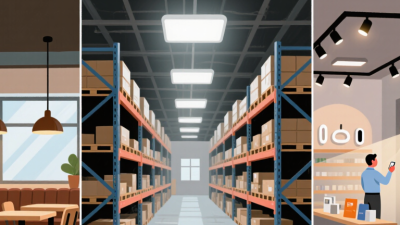
Commercial lighting supply companies typically offer LED high-bay fixtures for warehouses, flat panels for offices, and downlights for corridors or reception areas. Linear systems suit long aisles and open workspaces. Outdoor options include area lights, wall-mounted fixtures, and weather-rated floodlights. Emergency luminaires and exit signs support safe movement during power interruptions. The right mix depends on ceiling height, task demands, operating hours, and existing electrical infrastructure.

Tips: Check light output, color temperature, glare control, and dimming compatibility before selecting fixtures. Ask for photometric data and confirm that the proposed layout fits the room dimensions. A sample installed at working height can reveal harsh shadows that product photos miss. Small test first.

Lighting solutions work best when they address how people use each space. A warehouse may need bright, evenly distributed light over picking zones, while a meeting room benefits from adjustable levels and softer illumination. Sensors and scheduled controls can reduce unnecessary operation, but only when their settings match real occupancy patterns. Maintenance access matters, too; a fixture that is difficult to reach may raise long-term costs. Even careful plans can miss local variations in ceiling finish or daylight, so review the space after installation and adjust where needed.

Leading Suppliers and Their Areas of Specialization

Commercial lighting suppliers differ less by catalog size than by the problems they solve. Broadline distributors support contractors with lamps, drivers, mounting hardware, and replacement parts. Their strength is availability: a failed driver in a corridor can matter more than a striking showroom fixture. Architectural specialists focus on appearance and optical control, supplying recessed, pendant, track, and wall-wash systems for offices, hotels, and shops. They can help match beam angles, color consistency, and finishes to project drawings. Details matter. Ceiling depth, wiring access, and delivery times can change a specification that looked perfect on paper.

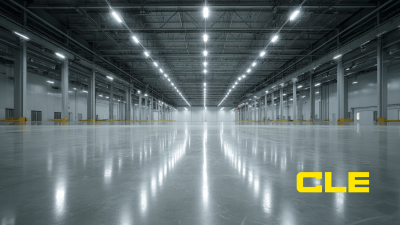
Other suppliers concentrate on high-bay and task lighting for warehouses, workshops, and production floors. They may assess mounting height, glare, dust exposure, and operating hours before recommending equipment. Controls specialists integrate occupancy sensors, daylight response, dimming, and scheduling; commissioning support matters as much as the hardware. Emergency and exterior suppliers focus on exit routes, weather exposure, and service access. Ask for photometric files, warranty terms, control compatibility, and product samples where practical. A neat spreadsheet is not proof of a good decision; even careful plans can overlook maintenance access or how a space is actually used.

Technology Trends and Factors in Supplier Selection

Commercial lighting suppliers are adapting to LEDs, connected controls, and more detailed energy monitoring. These technologies can reduce power use, but performance depends on the whole system. A high-efficiency fixture may still disappoint if its light distribution leaves aisles uneven or creates glare at workstations.

Ask for photometric files and compare beam patterns with the actual ceiling height and layout. Check color consistency, flicker data, dimming range, and compatibility with the planned controls. Small details matter.

Supplier selection should go beyond the catalog. Request clear product specifications, realistic lead times, warranty terms, and access to replacement drivers or lenses.

For a warehouse, confirm that fixtures suit the mounting height and operating temperature. For an office, review glare control and color quality under everyday conditions. Samples help, but one sample cannot reveal every installation issue.

A tidy specification sheet may hide a messy site reality. That deserves a second look. Suppliers should answer technical questions directly and explain any limits, rather than promise that one fixture suits every space. Compare the support available during commissioning, too; control settings can be confusing, and rushed adjustments often go unnoticed.