
Top CNC Machining Centers for Sale in 2026
In 2026, buyers comparing Cnc Machining Centers face more than a choice of spindle speed or price. They must match machine capacity to real parts, production volume, and operator skill. A compact vertical center may suit aluminum brackets, while a rigid five-axis model can reduce setups for complex housings. Every option has trade-offs.
This guide examines leading CNC machining centers for sale in 2026 through practical criteria: travel, spindle power, tool capacity, control usability, service access, and total ownership cost. A specification sheet cannot show how quickly chips clear from a deep pocket, or whether an operator can reach the tool changer without awkward movement. Those details matter on a busy shop floor. So does support after installation. Buyers should also consider available floor space, electrical requirements, and the skills needed to program and maintain each machine.
We will compare machine types and manufacturers without treating one brand as the right answer for every workshop. Buyers should verify current configurations, delivery estimates, warranty terms, and local service coverage directly with suppliers, since listings and packages can change. Ask for a test cut using material close to your own work. It may reveal vibration, finish issues, or setup limits that brochures leave out.
There is no perfect shortlist. Even a capable machine can disappoint when workholding, programming workflows, or maintenance plans are overlooked. Use the following sections to build a grounded comparison, then confirm the details against your parts and budget. This is a starting point, not a substitute for a shop-floor trial.
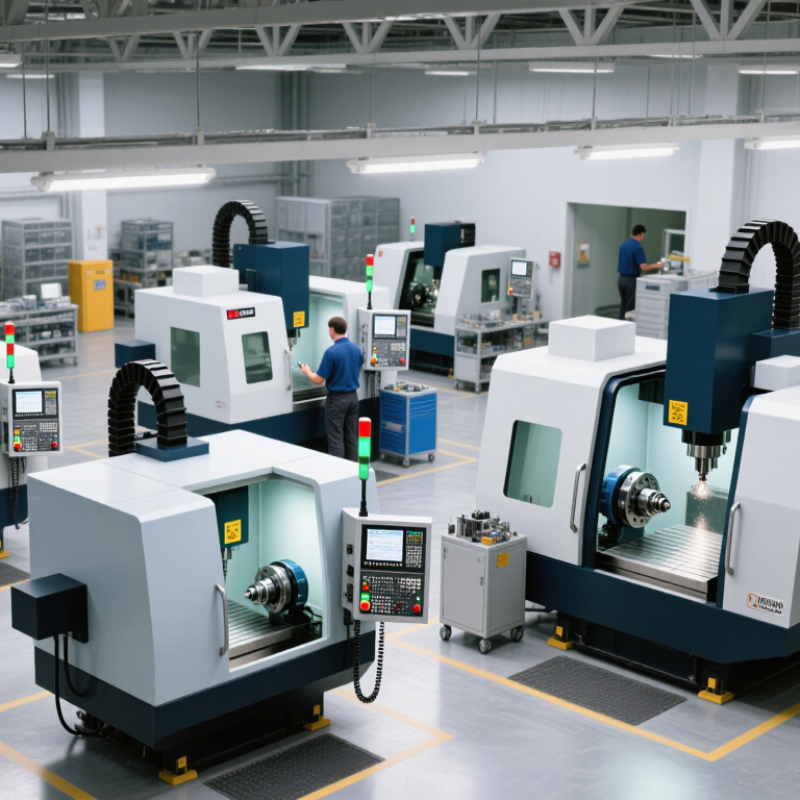
What Is a CNC Machining Center and How Does It Work?
A CNC machining center is a machine tool that removes material from a workpiece under computer control. It can perform operations such as milling, drilling, and tapping in one setup. Unlike a manual machine, it follows programmed movements along several axes. That is the basic idea.
The process starts with a digital part design, which is converted into toolpaths and machine instructions. An operator secures the stock in a vise or fixture, loads suitable cutting tools, and checks the program before machining begins. The controller moves the spindle and table along programmed axes, while the cutting tool shapes the material. A tool changer can select different tools automatically.
Small details matter. Incorrect tool length data or a loose fixture can spoil a part.
During cutting, coolant may reduce heat and help clear chips from the work area. The operator monitors sound, vibration, tool wear, and dimensions, then adjusts the setup when needed. A probe can measure workpiece position or features, but it cannot correct every setup mistake.
Even a well-programmed center depends on sound fixturing and careful inspection. It is not magic.
For buyers comparing centers, travel range, spindle capability, tool capacity, and control features should match the parts they actually plan to make. A larger machine is not automatically the better choice.
Which Types of CNC Machining Centers Are Available in 2026?
CNC machining centers available in 2026 range from vertical and horizontal models to five-axis, gantry, and mill-turn configurations. Vertical machining centers suit compact parts and straightforward access from above. Horizontal models use a different approach: their spindle orientation and pallet systems can help manage chips during longer production runs. It depends.
Five-axis centers move a part or tool along three linear and two rotational axes. They can machine angled surfaces in fewer setups, but programming and fixture design take care. Gantry centers provide a large working envelope for bulky parts, such as structural components. Mill-turn machines combine milling and turning operations, reducing transfers between separate machines.
Automation is also shaping equipment choices. The International Federation of Robotics reported 4,281,585 industrial robots in operation worldwide at the end of 2023 in its World Robotics 2024 report. That figure is not specific to machining centers, but it shows the scale of industrial automation surrounding them. Buyers should check whether a center supports their planned loading method, tool capacity, part dimensions, and production volume. Fit matters. A machine with more axes may still be the wrong choice if setup demands exceed the shop’s skills or floor space.
Top CNC Machining Centers for Sale in 2026 – Which Types of CNC Machining Centers Are Available in 2026?
| Machining Center Type | Typical Axes | Spindle Orientation | Typical Configuration | Best Suited For | Key Buying Considerations |
|---|---|---|---|---|---|
| Vertical Machining Center (VMC) | 3 axes; optional 4th or 5th axis | Vertical | Fixed table with a spindle moving vertically; commonly configured with an automatic tool changer and a range of table sizes. | General-purpose milling, drilling, tapping, and production of prismatic parts, plates, and fixtures. | Check X/Y/Z travel, table load capacity, spindle speed and power, tool capacity, and whether an added rotary axis fits the workpiece. |
| Horizontal Machining Center (HMC) | Typically 3 linear axes, often with a rotary table | Horizontal | Horizontal spindle, commonly paired with a pallet changer or rotary table to present multiple sides of a part. | High-volume production and multi-face machining of housings, castings, and other parts that benefit from fewer setups. | Review pallet size and exchange system, spindle taper, tool capacity, chip evacuation, and the work envelope with rotary motion included. |
| 5-Axis Machining Center | 5 simultaneous or indexed axes | Vertical or horizontal | Uses two rotary axes in addition to three linear axes; rotary motion may come from a tilting table, swivel head, or a combination. | Complex contours, angled features, impellers, molds, aerospace components, and parts requiring machining on several faces. | Compare simultaneous versus indexed capability, rotary-axis range, collision clearance, workholding options, and required CAM and postprocessor support. |
| Bridge or Gantry Machining Center | Usually 3 linear axes; optional rotary axes | Often vertical, with configuration-dependent spindle heads | Bridge or gantry structure provides a large working envelope; machines range from compact bridge designs to large-format systems. | Large panels, molds, dies, aerospace structures, and other components that need a long or wide machining area. | Check usable travel, table or floor-fixture capacity, machine footprint, foundation requirements, head options, and accuracy across the full work area. |
| Drilling and Tapping Center | Typically 3 axes; optional rotary axis | Vertical | Compact, high-speed configuration optimized for rapid tool changes and drilling, tapping, and light milling operations. | Small parts with many holes or tapped features, including components for electronics, appliances, and general manufacturing. | Verify tapping method, spindle speed and torque range, tool-change time, workpiece size, and whether the machine can handle the required milling cuts. |
Note: Configurations and capabilities vary by machine size and options. Confirm the required work envelope, accuracy, spindle specifications, and tooling with the seller before purchase.
What Features Distinguish the Top CNC Machining Centers for Sale?
What distinguishes the top CNC machining centers in 2026 is not a single headline speed. Look for rigid construction, stable thermal control, and repeatable accuracy across a full shift. A heavy machine bed and well-supported spindle help limit vibration when cutting steel. Ask for accuracy and repeatability data under stated test conditions, not just a best-case figure. Small print matters.
Control and connectivity also count. Deloitte’s 2024 Smart Manufacturing Survey found that 86% of surveyed manufacturers viewed smart manufacturing as a driver of competitiveness over the next five years. For a machining center, that means useful machine-status data, clear alarms, and controls operators can actually learn. The International Federation of Robotics reported 541,302 industrial robot installations worldwide in 2023, showing how common automation has become. That does not mean every shop needs a robot; reliable tool changing and straightforward interfaces may deliver more value.
Check the details on the shop floor. Can the machine hold tolerance after warming up? Are probes, tool measurement, and chip removal suited to the parts you run? A fast spindle can look impressive, yet poor chip evacuation may interrupt a long aluminum cut. I would also compare service response times and the cost of common wear parts. Specifications rarely show the full picture. A test cut using your material, tooling, and target cycle time is a more honest measure of fit.
How Do Leading CNC Machining Centers Compare in Performance?
Top CNC Machining Centers for Sale in 2026
How Do Leading CNC Machining Centers Compare in Performance?
Leading CNC machining centers differ less by headline spindle speed than by how consistently they hold accuracy under load. Vertical centers often offer straightforward access and lower setup complexity for plate work. Horizontal centers can support multi-face machining with fewer workpiece repositionings. Five-axis models reach angled features in one setup, but add programming and calibration demands. Compare cutting time, tool-change time, repeatability, and uptime using the same material and part geometry. Deloitte and MAPI’s 2024 Smart Manufacturing Survey found that 86% of manufacturing executives expect smart manufacturing solutions to drive competitiveness within five years. That signals the value of connected monitoring, but it does not prove any machine cuts faster.
Tips: Request positioning and repeatability results measured under ISO 230-2. Ask for a sample cycle-time estimate using your actual part, tooling, and tolerances. Specs are only a start.
A practical comparison should include thermal stability after warm-up, chip evacuation, and service access. These details can affect usable output more than a peak-speed figure. A compact vertical center may outperform a larger machine on short-run work if setups are quicker. For unattended production, check tool capacity, probing options, and alarm recovery. Catalog figures can mislead; real results depend on the cut, the fixture, and the operator. One point is easy to overlook: a faster machine is not automatically the cheaper one per finished part.
Top CNC Machining Centers for Sale in 2026: How Do They Compare?
Indicative spindle-speed ranges commonly found in machine specifications. Actual capabilities vary by model, spindle configuration, and application.
Higher spindle speed can benefit small-tool and high-speed machining, but it does not determine overall productivity on its own. Consider torque, accuracy, work envelope, tool-changing time, and the materials being cut.
What Should Buyers Consider Before Choosing a CNC Machining Center?
A CNC machining center should be chosen around the parts you actually make, not the largest number in a brochure. Grand View Research valued the global CNC machine market at $101.22 billion in 2023 and projected 6.7% annual growth from 2024 to 2030. That growth signals a broadening market, but it does not make every machine suitable for your shop. List your materials, part dimensions, tolerances, and monthly volumes. Then check spindle speed and torque against real cutting conditions. A machine that handles aluminum quickly may struggle with demanding steel cuts. Fit matters.
Look beyond the purchase price. Compare tool capacity, table size, axis travel, control usability, service access, and the cost of routine maintenance. Ask for a test cut using your material and a representative part; inspect finish, cycle time, chip flow, and tool changes. The International Federation of Robotics reported 541,302 industrial robots installed worldwide in 2023. If automation may be part of your plan, check whether the center supports practical loading, safe access, and reliable communication with external equipment. Also confirm local technician availability and spare-parts lead times. No checklist catches everything. A spreadsheet may miss a chip chute that clogs during a long shift, so operators should review the setup before purchase.
