Top Accent Lighting Manufacturers for Global Buyers?
Choosing the right Accent Lighting manufacturer requires more than comparing catalog prices. Global buyers must examine optical performance, material quality, production consistency, and after-sales support. A polished showroom image can hide weak heat management or unstable color rendering. Details matter: a narrow beam should create a clean wall wash, not a bright hotspot. A recessed trim should sit flush after installation. Replacement parts should remain available after the first project ends.
Richard Kelly, a pioneering American lighting designer, expressed a lasting principle: “Light reveals architecture.” His idea remains valuable for buyers evaluating manufacturers today. The strongest suppliers treat light as a design tool, not merely an electrical product. They offer tested beam angles, reliable dimming, consistent color temperatures, and clear photometric data. They also understand regional requirements, including product testing, electrical compatibility, and documentation for professional projects. These qualities help architects, contractors, and distributors reduce costly surprises.
This guide introduces leading Accent Lighting manufacturers serving international markets. It considers product depth, customization, manufacturing experience, design support, and supply reliability. Some companies excel at architectural linear systems. Others perform better with decorative fixtures, track lights, or compact retail solutions. No ranking is perfect. Buyer priorities change by project, climate, budget, and installation team. I have also learned that attractive specifications do not always guarantee smooth field performance. A sample inspection and small pilot order remain wise steps. The best manufacturer is not always the largest. It is the partner that delivers measurable quality, honest communication, and dependable light when the project is finally switched on.
What Is Accent Lighting and Where Is It Used?
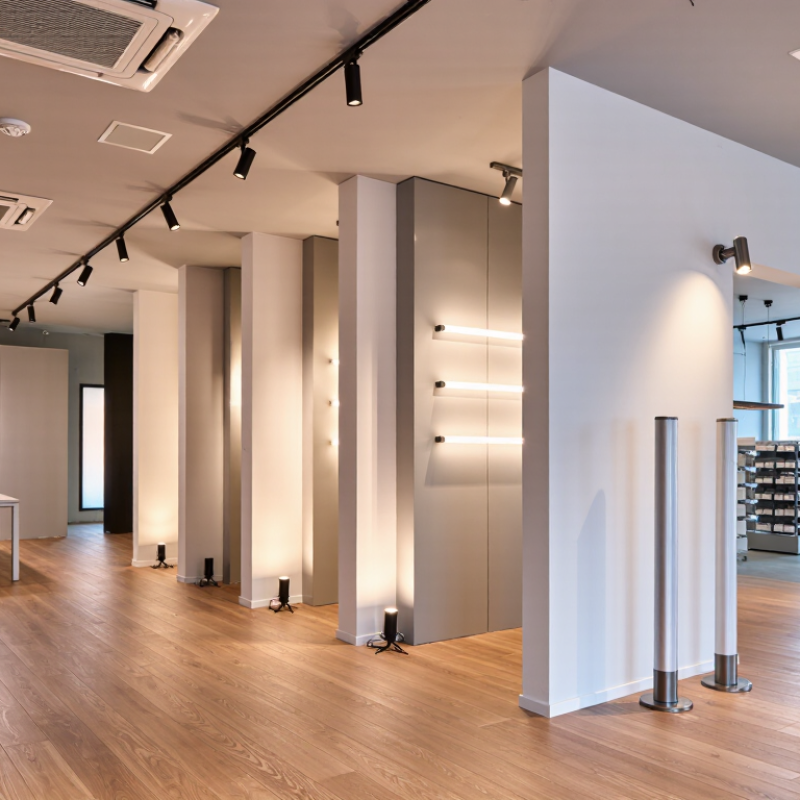
Accent lighting is a focused layer of illumination that draws attention to a specific object or architectural feature. Unlike general lighting, it creates visual hierarchy through contrast, direction, and controlled brightness. A spotlight on a painting, a narrow beam over a sculpture, or light beneath a floating shelf can change how a room feels.
It is widely used in homes, galleries, hotels, restaurants, retail stores, and outdoor landscapes. In a kitchen, concealed strips can highlight cabinet textures without dominating the room. In a store, adjustable fixtures can guide customers toward selected products. Landscape applications often illuminate trees, steps, walls, and water features. Small details matter. Beam angle, color rendering, glare control, and dimming performance should match the setting.
When comparing manufacturers, global buyers should request photometric files, material details, warranty terms, and testing documentation. Color temperature can appear different on a screen than in a finished space. I have seen warm light make wood attractive, yet make white surfaces look dull. A tight beam may emphasize artwork beautifully but create harsh shadows nearby. That trade-off is easy to miss. Outdoor projects also require suitable ingress protection, stable drivers, and voltage compatibility. Samples should be tested at the actual installation height, not only on a catalog page. Even experienced planners sometimes specify too many fixtures. More light is not always better.
How to Evaluate Accent Lighting Manufacturers
Choosing accent lighting manufacturers requires more than comparing catalog prices. IEA data indicates that lighting consumes about 15% of global electricity. Efficiency therefore affects operating budgets, not only sustainability claims. Request LM-79 photometric reports, LM-80 LED data, and TM-21 lifetime projections. These documents reveal whether advertised output matches tested performance.
Check the beam angle, color consistency, glare control, and dimming behavior with physical samples. A narrow 15-degree beam should create a clean wall highlight, not a bright hotspot. Ask for tested CRI, R9, flicker results, and color-maintenance data. IEC 62471 testing is also important for assessing photobiological safety. The U.S. Department of Energy reports that LED lighting can use at least 75% less energy than incandescent lighting and last up to 25 times longer. Claims still need verification.
Reliability appears in small details. Examine connector quality, driver temperature, IP and IK ratings, warranty exclusions, spare-part policies, and factory quality records. Request samples from different production batches. One perfect sample proves little. Manufacturing experience matters, but transparent evidence matters more. I would also review delivery history, packaging protection, and response times for failed units. A manufacturer may offer excellent optics yet lack consistent color control. That weakness can become expensive across a large project. Avoid choosing on price alone; compare tested performance, service capacity, and long-term replacement risk.
Leading Accent Lighting Manufacturers for Global Buyers
Leading Accent Lighting Manufacturers for Global Buyers
Global buyers often need more than attractive fixtures. They need stable color, accurate beam angles, safe wiring, and predictable delivery. Experienced accent lighting manufacturers provide photometric files, material specifications, and test reports before production. These documents help buyers compare performance instead of judging products from showroom photographs.
A reliable manufacturer should explain LED efficiency, color rendering, dimming compatibility, and thermal management in clear language. Ask about voltage options, plug standards, ingress protection, and packaging methods for long-distance shipping. Factory audits can reveal details that catalogs miss, such as unfinished cable joints or crowded assembly benches. Small details matter.
Manufacturers serving international projects should understand regional compliance requirements and maintain traceable quality records. Sample testing is valuable, but it does not guarantee every production batch will match perfectly. That is an uncomfortable truth. Buyers should request pre-shipment inspections, random light-output checks, and written tolerance limits. Lead time estimates also deserve careful review, especially during peak seasons. A practical supplier will discuss risks openly, suggest workable alternatives, and correct technical misunderstandings without exaggeration. Some manufacturers may offer lower prices, yet weaker documentation can create installation delays, replacement costs, or inconsistent lighting across a retail display. The strongest partnerships grow through transparent communication, repeat testing, and careful attention to the installation environment.
International Sourcing, Compliance, and After-Sales Support
Global buyers should evaluate accent lighting manufacturers beyond catalog design and unit price. International sourcing begins with clear photometric data, material specifications, production capacity, and realistic lead times. Request samples before approving a large order. Test samples early.
A reliable supplier should provide recent reports for electrical safety, electromagnetic compatibility, and material performance in the target market. Requirements vary by country, so buyers should confirm applicable standards with qualified local professionals. A certificate alone is not proof. Factory audits can reveal weak wiring controls, inconsistent color temperature, or poor waterproofing. These details often remain invisible in polished product photos.
After-sales support deserves equal attention. Confirm warranty duration, replacement procedures, spare-part availability, and response times before signing a contract. Ask whether the supplier can provide installation guidance, wiring diagrams, and updated compliance documents. Packaging should protect glass, finishes, and delicate connectors during long-distance shipping. A practical agreement should define defect evidence, inspection deadlines, and responsibility for corrective action. No sourcing process is flawless. Even experienced teams can overlook regional plug types or dimming compatibility. That is why buyers should record every technical decision and approve a pre-shipment sample. Small documentation gaps can become expensive delays after installation. Suppliers that communicate clearly, admit limitations, and improve after feedback are usually safer long-term partners.
Top Accent Lighting Manufacturers for Global Buyers
International sourcing, compliance, and after-sales support checklist by destination market
The chart counts major compliance areas commonly reviewed for imported accent-lighting products: electrical safety, electromagnetic compatibility, hazardous-substance restrictions, and energy-efficiency requirements. A value of 1 indicates that the framework may apply to the product or market; product-specific exemptions and voluntary certification requirements are excluded.
Reference frameworks: European Commission CE marking, EMC, RoHS and Ecodesign requirements; UK product-marking and energy regulations; U.S. FCC, DOE and state chemical-restriction rules; Canadian ISED and energy-efficiency requirements; Australia and New Zealand RCM and GEMS requirements.