
Top 10 Lamination Machines for Global Buyers
Choosing a Lamination Machine is a production decision, not a simple equipment purchase. The right model affects bond strength, film clarity, energy use, waste, and delivery reliability. Our “Top 10 Lamination Machines for Global Buyers” guide examines these details through a practical, international lens.
Industry data supports this focus. Smithers’ report, The Future of Flexible Packaging to 2028, identifies flexible packaging growth as a continuing driver for advanced converting equipment. Grand View Research also reports sustained expansion in flexible packaging, supported by food, pharmaceutical, and consumer goods applications. These trends create demand for machines that handle solventless, solvent-based, and water-based adhesives with consistent tension control. However, market forecasts differ by region, material, and reporting method. That uncertainty deserves attention.
As Pierre Pienaar, former President of the World Packaging Organisation, has stated, “Packaging is not the product, but it is part of the product.” His point applies directly to lamination quality. A poorly bonded pouch can wrinkle under warehouse light, split during transport, or lose its barrier protection. Small defects become expensive claims.
This guide compares operating speed, coating accuracy, substrate compatibility, automation, maintenance access, and after-sales support. It also considers real factory conditions, including humid rooms, limited technical staff, and unstable power supplies. A faster machine is not always the better machine. That is an easy mistake. Buyers should question headline specifications, request test samples, and verify lifetime operating costs before committing. Our ranking is useful, but not final. Production goals still matter most.
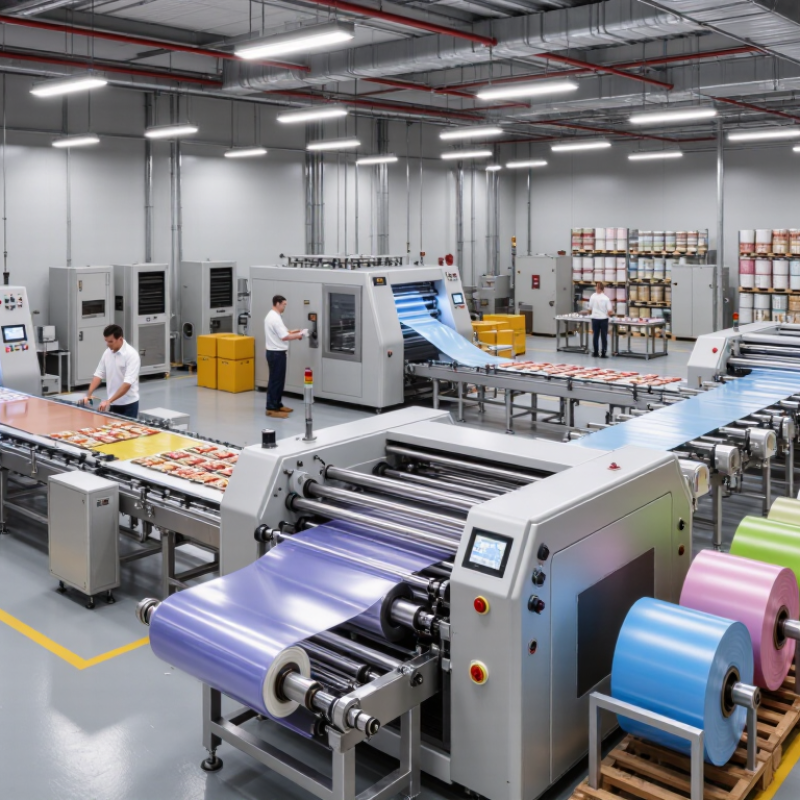
Lamination Technologies: Dry, Solventless, Wet, and Thermal Processes
When global buyers compare the top 10 lamination machines, process compatibility matters more than catalog speed. Dry lamination uses adhesive, heat, and a drying oven. It suits demanding multilayer packaging, but solvent handling, ventilation, and residual solvent testing require strict control. Web tension must stay stable. Small errors can create wrinkles, bubbles, or weak bonds.
Solventless machines meter two reactive adhesive components without a drying tunnel. They reduce emissions and energy use, yet mixing accuracy and curing time are critical. A roll may look perfect today and fail after several days. Wet lamination applies water-based adhesive and works well with paper, foil, and absorbent films. Its main challenge is moisture removal, especially in humid production rooms. Thermal lamination uses heat-activated film, making operation relatively clean and simple. It can be effective for short runs, labels, and protective finishes, but excessive heat may distort thin films.
Real factory trials are essential. Ask each supplier to test your substrates, ink system, coating weight, and target speed. Do not trust speed alone. A fast machine with unstable tension can waste more material than it produces. My own preference changes by project; lower emissions do not always mean easier operation. Operators, maintenance access, curing space, and local safety rules deserve equal attention. Weak points often appear after installation.
Top 10 Lamination Machines for Global Buyers - Lamination Technologies: Dry, Solventless, Wet, and Thermal Processes
Representative machine configurations and typical operating ranges for flexible packaging and industrial converting applications
| Rank | Machine Configuration | Process | Typical Web Width | Typical Speed | Compatible Materials | Adhesive or Bonding Method | Main Advantages | Important Considerations |
|---|---|---|---|---|---|---|---|---|
| 1 | High-Speed Solventless Laminator | Solventless | 800–1,600 mm | 150–500 m/min | PET, BOPP, BOPET, PE, CPP, aluminum foil, paper | Two-component polyurethane adhesive without added solvent | Low emissions, no drying oven, reduced energy use, high productivity | Requires accurate adhesive metering, controlled temperature, and curing time before final use |
| 2 | Duplex Solvent-Based Dry Laminator | Dry | 800–1,600 mm | 200–500 m/min | Plastic films, foil, metallized films, paper, laminating webs | Solvent-based polyurethane or other formulated liquid adhesive | Excellent bond quality, broad material compatibility, established packaging technology | Needs explosion-protected drying equipment, solvent recovery or exhaust treatment, and careful residual-solvent control |
| 3 | Water-Based Wet Laminator | Wet | 800–1,600 mm | 80–250 m/min | Paper, board, films, aluminum foil, absorbent or printable webs | Water-based adhesive applied before immediate web joining | Low VOC emissions, suitable for paper-based products, relatively simple adhesive handling | Requires sufficient drying capacity; moisture-sensitive films and high-speed applications may need process optimization |
| 4 | Thermal Film Laminator with Heated Nip | Thermal | 500–1,600 mm | 30–150 m/min | Paper, board, printed sheets, thermal laminating films, synthetic paper | Heat-activated adhesive layer or pre-coated thermal film | No liquid adhesive preparation, clean operation, suitable for print protection and graphic products | Temperature and pressure must match the film; heat-sensitive inks, coatings, and substrates require testing |
| 5 | Compact Solventless Duplex Laminator | Solventless | 600–1,300 mm | 100–300 m/min | Flexible films, foil, paper, coated webs, recyclable mono-material structures | Low-viscosity two-component polyurethane adhesive | Small footprint, lower operating emissions, suitable for converters with moderate production volumes | Lower line speed and narrower width than large industrial systems; adhesive pot life must be managed |
| 6 | High-Temperature Thermal Laminator | Thermal | 600–1,500 mm | 20–120 m/min | Technical textiles, insulation films, nonwovens, paper, polymer films | Heat-sealable polymer layer, hot-melt film, or thermoplastic adhesive | Strong bond formation without solvent evaporation; useful for technical and industrial materials | Higher thermal load, cooling requirements, and possible substrate distortion at excessive temperatures |
| 7 | Solvent-Based Tandem Dry Laminator | Dry | 1,000–1,800 mm | 250–600 m/min | High-barrier films, foil laminates, multilayer packaging webs | Solvent-based adhesive with multi-zone hot-air drying | High output, precise drying control, suitable for complex multilayer structures | Higher capital and energy requirements; strict fire, ventilation, and solvent-safety systems are necessary |
| 8 | Water-Based Drying Laminator | Wet | 800–1,600 mm | 100–300 m/min | Paper, film, foil, coated stock, water-compatible packaging webs | Water-based acrylic, polyurethane, or starch-based adhesive | Lower VOC profile and good suitability for paper and board applications | Dryer size and energy consumption increase with coating weight, web speed, and moisture content |
| 9 | Three-Layer Solventless Laminator | Solventless | 800–1,600 mm | 100–350 m/min | Film/film, film/foil/film, barrier and recyclable multilayer structures | Two-component solventless polyurethane systems applied in separate lamination stages | Produces multilayer structures in fewer production stages and avoids solvent drying ovens | Complex tension control, adhesive distribution, and curing management are required |
| 10 | Sheet-to-Sheet Thermal Laminator | Thermal | Up to approximately 1,300 × 1,000 mm sheet format | 15–60 m/min equivalent line speed | Printed paper, folding carton board, posters, menus, labels, and display sheets | Heat-activated film with thermal nip or heated roller bonding | Suitable for short runs, variable formats, print finishing, and on-demand production | Lower continuous throughput than roll-to-roll systems; sheet flatness and feeding accuracy affect quality |
Note: Speed and width figures are representative industry ranges rather than guaranteed machine specifications. Actual performance depends on substrate thickness, adhesive formulation, coating weight, curing conditions, web tension, and final product requirements.