
10 Tips for Sourcing LED Lighting Solutions Globally
Sourcing Led Lighting Solutions across borders requires more than comparing catalog prices. It demands practical judgment, technical knowledge, and reliable supplier verification. A warehouse high bay may look efficient online, yet its beam angle, heat management, or driver quality can disappoint after installation. Real performance begins with clear specifications, not attractive photographs.
Experienced buyers examine lumen output, color consistency, surge protection, certifications, warranty terms, and replacement availability. They request test reports and product samples before approving large orders. Supplier audits also matter. A responsive factory should explain production controls, testing procedures, packaging methods, and expected lead times without vague promises. Small details reveal a great deal. For example, ask how failed modules are analyzed and documented.
Global sourcing still involves uncertainty. Shipping delays happen. Specifications can be misunderstood. Even a trusted supplier may provide inconsistent batches during rapid growth. That is why professional procurement teams use written quality standards, independent inspections, and staged payments where appropriate. They also confirm regional electrical requirements before production begins. One overlooked connector can create costly installation problems.
The following ten tips offer a practical framework for selecting dependable Led Lighting Solutions worldwide. They focus on measurable performance, supplier credibility, total ownership cost, and long-term service. Some recommendations may seem obvious. They are often ignored under deadline pressure. Careful sourcing is slower at the beginning, but it usually prevents expensive corrections later. Perfect decisions are rare. Better questions improve the outcome.
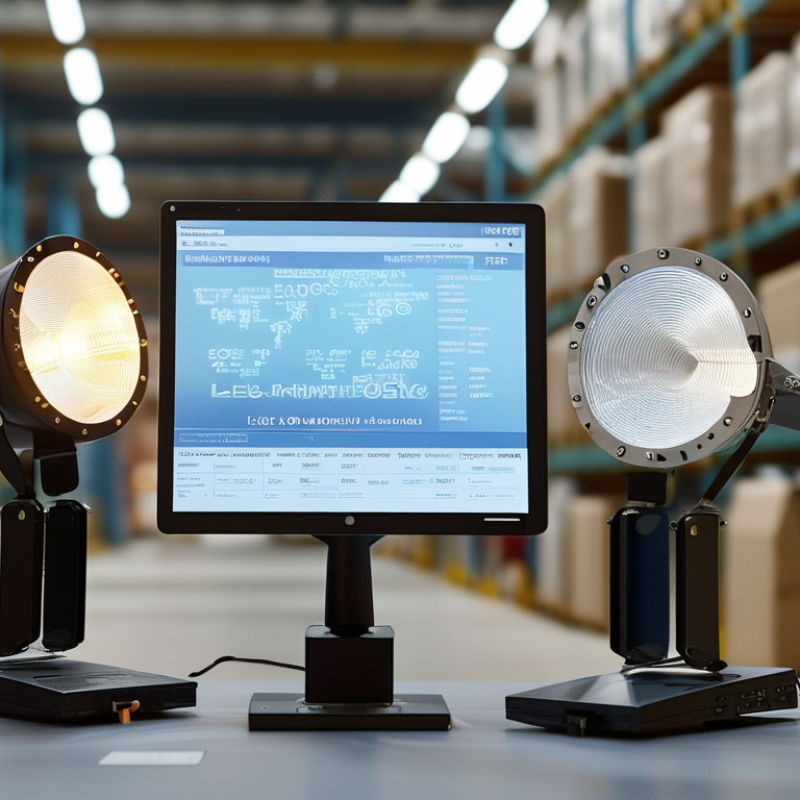
Define Project Requirements and Global LED Lighting Specifications
Defining project requirements is the foundation of successful global LED lighting sourcing. Begin with the space, not the product catalogue. Record room dimensions, ceiling height, mounting positions, and required light levels. Note working hours, temperature ranges, humidity, dust, and cleaning methods. A warehouse near a coastal port needs different protection than a dry office.
Specify voltage, frequency, wattage limits, color temperature, color rendering, beam angle, dimming method, and expected lifetime. Include emergency lighting needs and controls. Photometric files, installation drawings, test reports, and maintenance instructions should be part of the specification. Clear documents reduce costly interpretation across languages and time zones.
Global projects also require careful compliance checks. Confirm electrical safety, electromagnetic compatibility, energy performance, and local installation rules before approving production. In my experience, a small sample test can reveal glare, flicker, loose connectors, or an unsuitable driver. Test it in the actual room. Ask for batch traceability and consistent quality records.
A first draft is rarely complete. That is normal. Teams often overlook spare parts, replacement access, or customs documentation. Add these details before requesting quotations. Compare suppliers against the same measurable requirements, not attractive images or low prices. Keep approved samples, signed specifications, and inspection results together. They become practical evidence when production changes or performance questions arise.
Identify and Compare Qualified International Suppliers
When sourcing LED lighting globally, supplier names mean little without verifiable evidence. I compare factories through several practical lenses. Request business licenses, product certificates, test reports, and recent project references. Check whether documents match the exact model, wattage, voltage, and photometric data. A polished catalog is not proof. Ask for a sample from normal production, not a specially prepared unit. Measure power consumption, color temperature, beam angle, heat, and flicker. Record results with calibrated instruments when possible. Also inspect driver quality, soldering, sealing, and thermal paths. Small details reveal process discipline.
Qualified suppliers explain tolerances, failure rates, warranty terms, and replacement procedures clearly. I compare at least three suppliers using the same written specification and scoring sheet. Include price, minimum order quantity, lead time, packaging, inspection access, and communication speed. Request a video call from the production floor, then verify the facility independently. Talk with references about delayed shipments, claims handling, and performance after installation. A low quote may hide weaker components or inconsistent LED bins. That happened to me once. I focused too heavily on unit price and underestimated rework costs. The comparison should also test responsiveness under pressure. Send identical technical questions and note who answers precisely. Do not reward confident guesses. Before a large order, use a pilot shipment and define acceptance criteria. Keep inspection records, approved samples, and revision histories together. Supplier qualification is not a one-time task; it changes as products and factories change.
10 Tips for Sourcing LED Lighting Solutions Globally
Identify and compare qualified international suppliers by checking whether their products meet practical efficacy benchmarks for common commercial and industrial applications.
The chart shows typical minimum efficacy targets used during preliminary supplier screening. Final qualification should also verify photometric files, CRI, lifetime testing, ingress protection, safety certifications, warranty terms, production capacity, and delivery capability.
Evaluate Product Quality, Certifications, and Technical Compliance
Global LED sourcing often fails when buyers judge quality from brightness alone. A bright sample can still hide weak drivers, unstable color, or poor thermal design. From project inspections, I have learned to request production samples, not only showroom samples. Compare lumen output, color temperature, color rendering, power factor, and flicker under measured conditions. Ask for test data from an independent laboratory.
Certifications need careful verification. Check whether documents match the exact model, wattage, input voltage, and factory location. Confirm applicable requirements, such as IEC safety standards, electromagnetic compatibility, environmental restrictions, and ingress protection ratings. A certificate with an outdated model number is not reliable evidence. Request the original report, testing date, laboratory details, and scope of approval. Then verify the document through the issuing body when possible.
Technical compliance also depends on installation conditions. Review surge protection, operating temperature, dimming behavior, emergency functions, and connector specifications. For outdoor products, inspect seals and cable glands physically. A 50,000-hour lifetime claim means little without temperature data and a clear testing method. I once accepted a promising report without checking the driver revision. The delivered batch performed differently. That mistake changed my review process. Keep samples, photographs, test records, and approved drawings together. Leave room for doubt. Reliability grows from repeated checks, not confident paperwork.
Assess Pricing, Logistics, Import Rules, and Supplier Reliability
10 Tips for Sourcing LED Lighting Solutions Globally
Request landed-cost quotes, not factory prices. Compare unit cost, lumen output, efficacy, warranty, tooling, and payment terms. Benchmark at least three comparable offers. A cheaper fixture may consume more electricity or fail earlier. The IEA’s Energy Efficiency 2024 report estimates that lighting uses about 15% of global electricity. Efficiency deserves a price.
Ask for test samples. Measure output, color consistency, power factor, and heat performance. Ask for evidence. Confirm the correct HS classification with a qualified customs broker. Requirements for RoHS, WEEE, EMC, safety, and energy labeling vary by destination. Never treat one certificate as universal compliance. Review duties, local taxes, inspection fees, and documentation before ordering.
Choose the Incoterm carefully. Compare door-to-door landed costs, not only port prices. Build scenarios for sea, air, delays, and damaged cartons. UNCTAD’s Review of Maritime Transport 2023 states that over 80% of world merchandise trade by volume moves by sea. Logistics risk is therefore commercial risk. Audit production records, calibration logs, corrective-action reports, and worker safety procedures. Require batch traceability, independent testing, spare-part commitments, and a written warranty. The World Bank’s Logistics Performance Index 2023 highlights customs, tracking, and timeliness as key supply-chain differentiators. Pilot a small shipment before scaling. No forecast is perfect. I would still keep contingency stock, because one missed delivery can erase a carefully negotiated saving.
| Tip | Sourcing Dimension | Practical Benchmark or Data Point | What to Verify | Commercial or Logistics Impact | Risk Level |
|---|---|---|---|---|---|
| 1 | Define the technical specification | Compare wattage, luminous flux, efficacy, color temperature, color rendering, beam angle, ingress protection, and rated life. A practical commercial LED target is often 100–160 lm/W, depending on the product category. | Request test reports showing measured lumens, power consumption, power factor, color consistency, thermal performance, and lumen maintenance. | Clear specifications reduce quotation differences and prevent lower-cost products from being compared with higher-performance products. | Medium if specifications are incomplete; Low after laboratory verification. |
| 2 | Normalize the total purchase price | Compare prices using the same currency, quantity, packaging, payment terms, Incoterm, warranty period, and included accessories. Separate product cost from freight, insurance, duties, taxes, testing, and installation. | Ask for a landed-cost quotation in USD or the destination currency and confirm whether the offer is EXW, FOB, CIF, DAP, or another agreed delivery term. | A low factory price can become a higher delivered cost when freight, customs charges, compliance testing, and local handling fees are added. | High when quotations use different Incoterms or exclude destination charges. |
| 3 | Evaluate energy efficiency | Calculate lifetime electricity cost using: Annual kWh = (Watts × operating hours × quantity) ÷ 1,000. Include standby consumption for connected or sensor-enabled products. | Verify input wattage, power factor, operating hours, dimming behavior, driver efficiency, and actual light output under the required voltage and frequency. | A product with a higher purchase price may deliver a lower total cost of ownership through reduced energy consumption and fewer replacements. | Medium; inaccurate wattage or lumen data can materially distort payback calculations. |
| 4 | Check logistics and lead time | Plan separately for production, consolidation, export clearance, transit, import clearance, and inland delivery. For many international orders, total door-to-door lead time is commonly 4–12 weeks, depending on production and transport mode. | Obtain a written production schedule, carton dimensions, gross weight, loading quantity, port information, shipment milestones, and a contingency plan for delays. | Air freight is faster but substantially more expensive than sea freight; urgent replenishment should be budgeted separately from standard shipments. | High for project orders with fixed installation dates or limited inventory buffers. |
| 5 | Confirm import classification and duties | LED lamps and luminaires are commonly classified under different customs headings depending on product design, function, voltage, and whether a light source is integrated. Duty rates vary by destination and tariff code. | Confirm the applicable HS code with the importer or customs adviser, review country-of-origin rules, and calculate duty, import VAT or GST, brokerage, and port charges before ordering. | Incorrect classification can cause customs delays, penalties, reclassification costs, or unexpected tax exposure. | High until the tariff classification and documentation are confirmed in writing. |
| 6 | Review electrical and safety compliance | Common compliance requirements may include electrical safety, electromagnetic compatibility, restricted substances, photobiological safety, energy labeling, and radio requirements for connected products. | Match the product and destination market to the required standards and declarations. Verify that certificates apply to the exact model, voltage range, driver, and revision being purchased. | Missing or invalid compliance documents can prevent customs release, market entry, building approval, or insurance acceptance. | High because compliance gaps can stop sales or deployment entirely. |
| 7 | Test samples before mass production | Use a staged approval process: initial sample, engineering sample, pre-production sample, and shipment inspection. For large projects, test representative units from different production batches. | Measure light output, color temperature, color rendering, flicker, power consumption, thermal behavior, dimming compatibility, and mechanical fit under operating conditions. | Testing before mass production is generally less costly than replacing installed products or handling international returns. | Medium with documented testing; High when samples are skipped. |
| 8 | Assess supplier reliability | Use a weighted scorecard covering quality history, production capacity, financial stability, export experience, engineering support, response time, and corrective-action performance. | Request business registration information, factory or production-site evidence, quality-management records, reference projects without disclosing brand data, and recent inspection results. | A reliable supplier should provide consistent documentation, traceable production records, realistic lead times, and timely responses to nonconformities. | High when reliability is judged only by price or online presentation. |
| 9 | Protect warranty and quality commitments | Commercial LED warranties commonly range from 3–7 years, but coverage depends on rated operating hours, ambient temperature, voltage conditions, installation, and maintenance requirements. | Define failure criteria, repair or replacement responsibility, freight allocation, claim evidence, response deadlines, spare-parts availability, and the treatment of discontinued models. | A warranty without a practical claims process has limited value, especially when products must be returned across borders. | Medium when terms are contractual; High when warranty language is general or informal. |
| 10 | Use inspection, traceability, and payment controls | Set measurable acceptance limits for cosmetic defects, electrical performance, packaging damage, quantity variance, and functional failures. Use pre-shipment inspection before releasing the final payment. | Require serial or batch identification, approved drawings, packing lists, inspection reports, photos, and retention of quality records for each shipment. | Milestone payments linked to sample approval, production completion, inspection, and shipping documents reduce financial and delivery risk. | Low when controls are documented and independently verified; High without traceability. |
Note: Benchmarks are general planning ranges. Final pricing, lead time, duties, standards, and performance requirements should be confirmed for the specific product, order quantity, origin, destination market, and project conditions.
Finalize Contracts, Quality Inspections, and Long-Term Supply Plans
Global LED sourcing should begin with a contract that survives real factory conditions. The IEA’s Energy Efficiency 2023 report estimates that lighting consumes about 15% of global electricity. That scale makes small efficiency losses commercially significant. Specify lumen output, color consistency, driver performance, thermal limits, warranty terms, and acceptable failure rates. Add a written change-control clause. Suppliers must disclose changes to chips, drivers, solder, and production sites before shipment.
Quality inspection should combine laboratory testing with physical sampling. Check cartons, labels, wiring, dimming behavior, surge protection, and heat dissipation. Measure at least a defined sample from each production lot. The U.S. Department of Energy’s Solid-State Lighting research reports show that LED performance depends heavily on thermal management and system design, not only diode efficacy. A bright sample proves little. Keep test records, photographs, calibration dates, and corrective-action deadlines. Independent inspection is useful, but it is not infallible.
Long-term supply plans need more than a volume forecast. Set quarterly capacity reviews, safety-stock rules, approved substitute components, and recovery procedures for port delays. The International Energy Agency continues to identify efficiency improvements as a major energy-saving opportunity, which supports sustained LED demand. Still, demand forecasts can fail. I once treated a stable project pipeline as permanent; it was not. Use rolling forecasts, dual-source critical parts where practical, and review the contract every six months. Cheap pricing without traceability is usually expensive later.
Related Posts
-
How to Choose the Best LED Lighting for Your Needs?
-

Revolutionizing Efficiency: The Impact of LED Lighting Solutions on Energy Consumption and Cost Savings
-
Unlocking the Benefits of Commercial Led Lighting for Your Business
-

Unlocking the Secrets to Sourcing Premium Led Fixture Suppliers in a Competitive Market
-
Exploring Global Opportunities: The Surge of Foreign Buyers at the 137th Canton Fair for Design Lighting Innovation
-
7 Reasons Why the Best LED Fixtures Revolutionize Energy Efficiency for Global Buyers