Top Industrial Lighting Trends for Modern Workspaces and Factories?
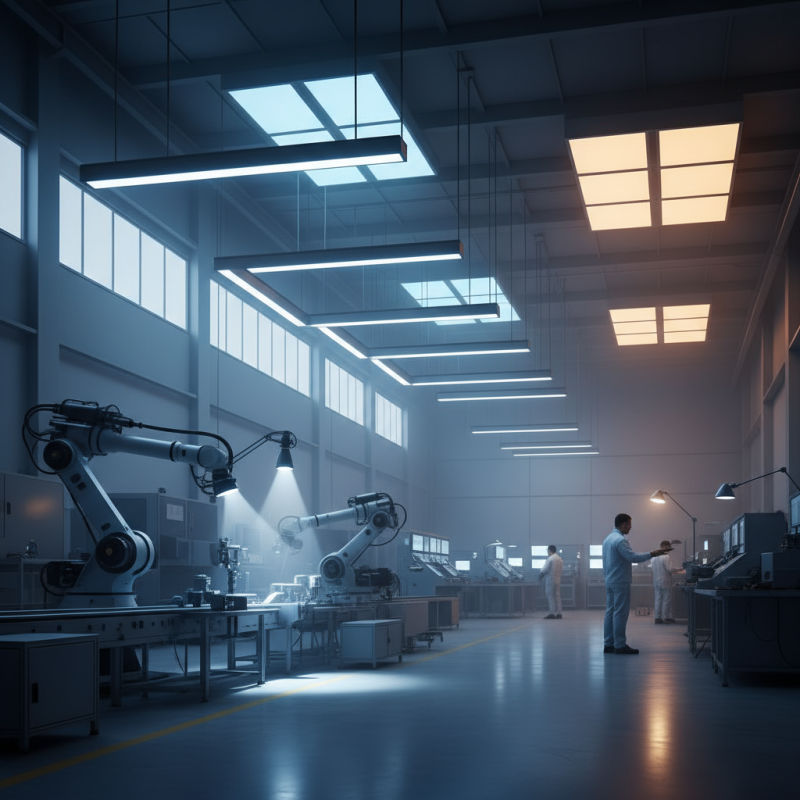
In today's rapidly evolving work environments, the role of industrial lighting has become increasingly significant. Effective lighting enhances productivity and safety in factories and modern workspaces. Several trends are emerging that reshuffle conventional thinking about industrial lighting.
One key aspect is the shift towards energy-efficient solutions. LED technologies are leading the charge, reducing energy consumption dramatically. Yet, there are challenges. Transitioning to new systems may require upfront investment and training for staff, raising concerns about budget constraints.
Another trend is the emphasis on smart lighting systems. These systems offer adaptability, automatically adjusting to various tasks and conditions. However, reliance on technology can lead to issues if the system fails or malfunctions. Balancing innovation with practicality is essential as we navigate the future of industrial lighting.
Latest Innovations in Industrial Lighting Technology
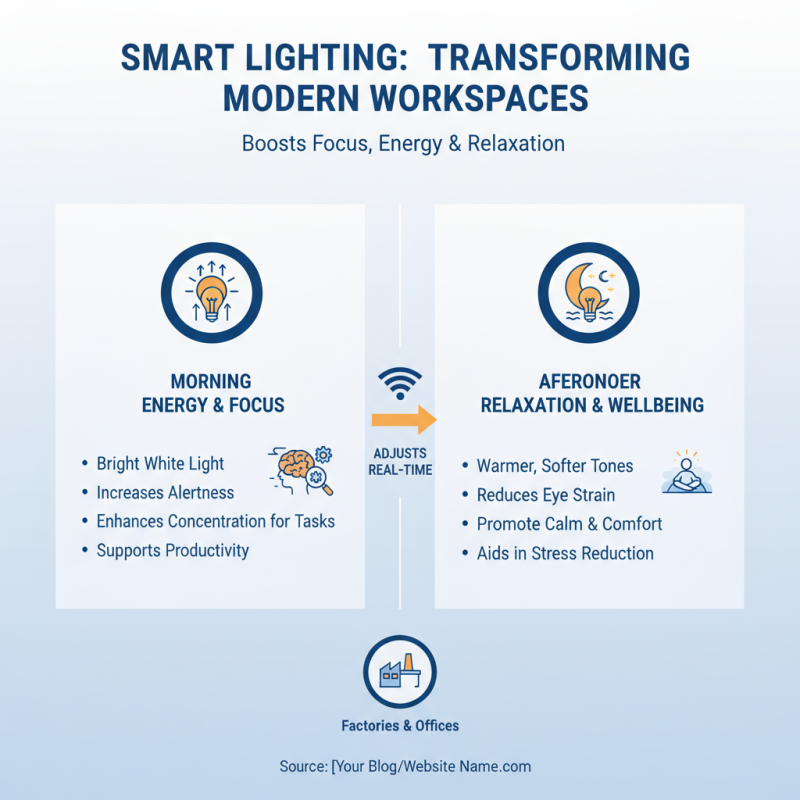
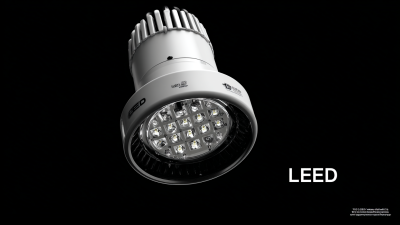
Lighting plays a crucial role in modern workspaces and factories. The latest innovations in industrial lighting technology focus on energy efficiency and smart solutions. LED lights are prominent, offering long lifespans and lower energy consumption. Smart lighting systems enable customization. Workers can control brightness and color temperature, creating a comfortable atmosphere.
Consider your workspace layout. Different zones may need different lighting solutions. In areas requiring precision, brighter, focused lighting is essential. Conversely, relaxation zones can benefit from softer, warmer light. This flexibility enhances productivity and employee satisfaction.
Tips: Regularly assess your lighting needs. As your workspace evolves, so should your lighting. Implementing sensors can optimize energy use. They adjust lights based on occupancy. This not only saves energy but also reduces costs over time. Maintaining light fixtures is also vital. A dirty bulb can dim light output significantly, impacting your workspace efficiency.
Sustainable Lighting Solutions for Modern Workspaces
In today's modern workspaces, sustainability is a key focus. Companies are seeking eco-friendly lighting options. Energy-efficient solutions help reduce carbon footprints. LED lighting is among the most popular choices. It consumes less power and lasts longer than traditional bulbs.
Natural light is another important aspect of sustainable design. Large windows and skylights can provide ample illumination. This not only saves energy but also enhances employee well-being. However, it is essential to balance natural and artificial light. Too much glare can cause discomfort and strain.
Smart lighting systems are gaining traction in industrial settings. These systems adjust brightness based on occupancy and ambient light. They can be programmed to turn off when not in use. Yet, the integration can be complex and may require ongoing adjustments. Over-reliance on technology can sometimes lead to issues rather than solutions. Sustainable lighting is a work in progress, needing continuous evaluation and improvement.
Top Industrial Lighting Trends for Modern Workspaces and Factories - Sustainable Lighting Solutions for Modern Workspaces
| Trend |
Description |
Benefits |
Implementation |
| LED Lighting |
Energy-efficient lighting option with a long lifespan. |
Lower energy costs, reduced heat emission. |
Replace existing fixtures with LED technology. |
| Smart Lighting Systems |
Automated lighting solutions that adjust based on occupancy and daylight. |
Increase energy savings, enhance user comfort. |
Install sensors and integrate with building management systems. |
| Induction Lighting |
Utilizes electromagnetic fields to produce light, known for durability. |
Minimal maintenance, high efficiency. |
Aiming for high-ceiling areas like warehouses. |
| Natural Light Optimization |
Design strategies to maximize daylight usage in workspace. |
Improved mood, reduced energy dependency. |
Implement skylights and large windows. |
| Human-Centric Lighting |
Lighting designed to support human health and wellbeing. |
Better focus and productivity, reduced fatigue. |
Use tunable white LED systems that mimic natural light patterns. |
Design Trends in Industrial Lighting for Factories
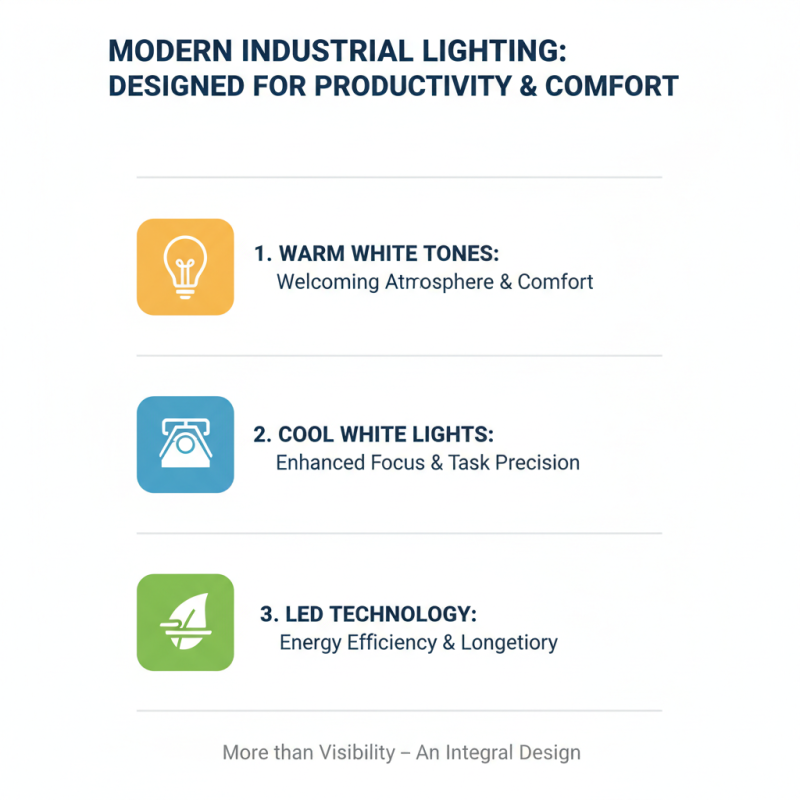
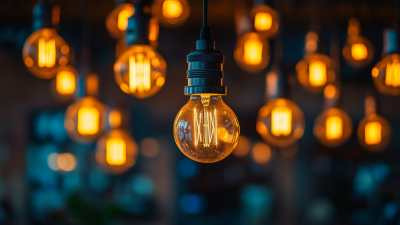
In modern factories, lighting is more than just visibility. It's an integral part of design. Industrial lighting now caters to worker comfort and productivity. LED technology leads the way, offering energy efficiency and longevity. The use of warm white tones creates a welcoming atmosphere. Bright, cool white lights enhance focus in detail-oriented tasks.
Tip: Choose adjustable lighting fixtures. They allow for flexibility based on different tasks and moods. Versatile lighting can lead to happier employees. Natural light integration is another trend. Skylights and large windows boost morale. They also reduce energy costs. Some factories still rely heavily on fluorescent lights, which can feel harsh and cold. It may be time to rethink that approach.
Another interesting shift is using smart lighting systems. These can adapt in real-time to changing needs. Motion sensors and timers optimize energy use. Yet, not all facilities are equipped for this technology. It can involve complicated retrofitting. This needs careful planning to avoid disruption. Striking a balance between modern needs and existing infrastructures can be tricky. Each space has its unique challenges.
Safety and Compliance Considerations in Industrial Lighting Design
Safety and compliance are crucial aspects of industrial lighting design. A well-lit workspace reduces accidents and enhances productivity. However, achieving optimal lighting requires careful planning. Compliance with national and local regulations must be prioritized. These guidelines help ensure that workplaces are safe for all employees.
Selecting the right type of lighting is essential. LED solutions are popular due to energy efficiency. Yet, the color temperature of the lights must be appropriate. Too harsh or too dim lighting can lead to errors in tasks. It is also important to consider areas with high levels of machinery. Shadows can create blind spots, presenting risks. Regular evaluations and adjustments might be necessary.
Listening to workers' feedback on lighting can reveal unseen issues. Their insights can highlight areas that need improvements. Some workers may prefer brighter lights for detailed tasks. Others may feel overwhelmed by intense illumination. Balancing these preferences is a challenge but vital for safety and well-being. Regular training on lighting safety helps maintain compliance and create a secure environment.