
How to Find a Top Lantern Festival Supplier in China?
Choosing a lantern festival supplier in China is not just a price comparison. It is a decision about design, engineering, production, shipping, and on-site coordination. The audience can be large: China’s Ministry of Culture and Tourism reported 474 million domestic trips during the 2024 Spring Festival holiday, with spending of 632.7 billion yuan. UN Tourism’s January 2025 World Tourism Barometer estimated 1.4 billion international tourist arrivals worldwide in 2024. These figures do not predict attendance at any single festival. They do show why public-facing event details deserve careful planning.
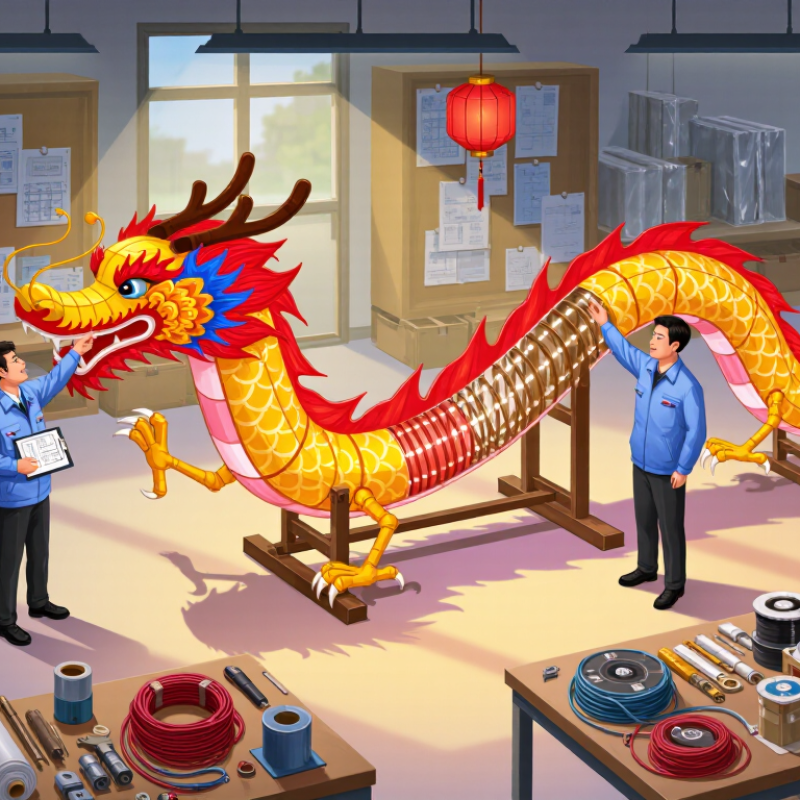
A reliable lantern festival supplier should explain how concepts become finished installations. Ask for recent project photographs, dimensioned drawings, material specifications, production schedules, and clear installation plans. Request relevant test documents for electrical components and materials, then check that they match your project’s requirements. A glowing dragon may look simple in a photograph. Its frame, wiring, joints, and packing plan are not. Small details matter.
This guide outlines practical ways to compare Chinese suppliers, verify their experience, and assess communication before placing an order. It also considers sampling, quality checks, shipping schedules, and after-sales support. Do not rely on polished images alone. I would still ask one more question: who handles a late shipment or a damaged component? No supplier is perfect, and a checklist cannot remove every risk. But clear evidence and candid answers make a stronger starting point than a low quote alone.
Define Your Lantern Festival Project Requirements
Before contacting a lantern festival supplier, define what the installation needs to achieve. Will it guide visitors, mark an entrance, or create a central photo point? Be specific. Record venue dimensions, ceiling height, available power, and expected visitor numbers. A measured sketch can be more useful than a mood board alone. Include viewing distances, since a three-meter lantern may look small across a wide plaza.
Describe the visual direction using colors, shapes, and cultural motifs, while separating essential details from flexible choices. State whether lanterns will hang indoors, stand outdoors, or span a walkway. Wind, rain, and access for installation can affect materials, framing, and labor. Check the venue’s safety requirements, electrical limits, loading access, and approved fixing points before requesting a quote. Share target dates for design approval, production, delivery, installation, and removal. Leave room for delays; event schedules rarely stay perfectly still.
Set a budget range and clarify what it covers, including samples, packaging, freight, installation labor, and spare parts. Request drawings, material details, lighting specifications, and a written schedule to compare proposals fairly. Some details may remain uncertain. Mark them clearly, and ask suppliers to state their assumptions before you approve a design. A polished rendering can hide practical questions, such as how a large lantern will fit through the venue’s loading door.
Identify China’s Lantern Supplier Types and Production Regions
China’s lantern suppliers generally fall into three groups: artisan studios, event-installation fabricators, and lighting or seasonal-goods manufacturers. Studios often make hand-shaped bamboo or metal frames with painted fabric. Event fabricators build large illuminated displays and may handle design, wiring, installation, and dismantling. Trading companies can consolidate products, but may not own production lines. The distinction matters.
Zigong, Sichuan, is widely associated with large-scale lantern craftsmanship and festival installations. Zhongshan’s Guzhen area is a major lighting-manufacturing cluster, useful when sourcing LED components and electrical assemblies. Yiwu in Zhejiang has a broad seasonal-goods and export-trading ecosystem. These are sourcing clues, not guarantees; a supplier’s actual workshop may be elsewhere. Ask for production-site videos, frame samples, wiring specifications, and photos of completed projects.
The National Bureau of Statistics reported that China’s cultural and related industries generated 12.95 trillion yuan in revenue in 2023, up 8.2% year on year. This figure covers a broad sector, not lanterns alone, so it should not be treated as a lantern-market estimate. Request a bill of materials and clarify whether the quote includes packaging, testing, and on-site assembly. A polished catalogue is useful. It is not proof of capacity.
| Supplier Type | Common Sourcing Region | Typical Capabilities | Best Suited For | What to Verify Before Ordering |
|---|---|---|---|---|
| Large-scale festival lantern fabricator | Zigong, Sichuan | Zigong is widely known for large lantern displays and festival installations. Suppliers in this category may design and fabricate themed structures, illuminated sculptures, and complete display projects. | Public lantern festivals, themed attractions, parks, and large outdoor events. | Request recent project photos and references; confirm structural drawings, materials, lighting specifications, installation scope, schedule, and after-sales support. |
| Traditional lantern craft workshop | Nanjing, Jiangsu, including the Qinhuai lantern tradition | May focus on traditional-style lanterns and decorative craftwork. The Qinhuai lantern tradition is associated with Nanjing; individual workshops vary in materials, techniques, and production capacity. | Cultural events, heritage displays, seasonal decorations, and smaller custom lantern orders. | Ask for close-up photos of construction and finishes; confirm whether items are handmade, the materials used, dimensions, packaging, and achievable order quantities. |
| LED and decorative-lighting manufacturer | Guangdong, particularly the Pearl River Delta’s lighting and manufacturing supply chains | May offer LED components, wiring, illuminated decorations, and fabrication services. Capabilities differ by supplier, and not every lighting manufacturer specializes in festival lanterns. | Illuminated decorations, repeatable product designs, and projects requiring specified electrical components. | Confirm voltage and plug requirements, applicable electrical certifications for the destination market, waterproof rating, component details, and sample-test results. |
| Export-oriented sourcing or trading supplier | Yiwu, Zhejiang | Yiwu is a major wholesale and sourcing center with a broad range of small commodities. An export-oriented supplier may coordinate products from multiple factories rather than manufacture every item itself. | Mixed-product orders, smaller decorative items, and buyers who need sourcing or export coordination. | Identify the actual factory for custom products; clarify who handles quality control, production changes, inspection, shipping documents, and responsibility for defects. |
| Festival project integrator | Often based in established event-production markets, with project teams and fabrication partners operating across China | Can coordinate design, fabrication, logistics, installation, and dismantling. The integrator may use subcontractors for engineering, lighting, or on-site work. | Turnkey projects involving multiple displays, site installation, and event-day support. | Request a written scope of work, site-specific drawings, subcontractor details, installation timeline, safety responsibilities, insurance information, and a clear payment schedule. |
Assess Supplier Experience, Craftsmanship, and Customization
How to Find a Top Lantern Festival Supplier in China?
Assess Supplier Experience, Craftsmanship, and Customization
A supplier’s claimed experience matters less than the work they can show. Ask for photos of completed lanterns, close-ups of joints, and examples from projects similar in size to yours. Look for even fabric tension, tidy seams, stable frames, and clean color transitions. A polished photo can hide weak construction. Request a sample or a short video showing how a lantern is assembled.
Check the sample. It reveals more than a catalog. For custom designs, send clear dimensions, reference images, and the intended display setting. Ask which details can be changed, such as shape, fabric color, lighting, or frame materials. Request a written drawing before production, then compare the finished sample against it. Some design details may need adjustment once the materials are assembled; that is worth discussing early.
Ask how the supplier checks consistency across a full order. Useful answers should cover material inspection, assembly checks, lighting tests, and packing methods. If the lanterns will be displayed outdoors, ask how the materials handle wind and moisture, and what maintenance they require. Confirm the production schedule, sample approval point, and how changes are recorded. A supplier may have impressive craftsmanship but still communicate poorly. Pay attention to response clarity, not just speed.
Compare Samples, Pricing, Production Timelines, and Quality Controls
When comparing lantern festival suppliers in China, request samples made with the same materials and finish planned for production. Check the frame for wobbling, seams for loose threads, and painted details under both indoor and outdoor light. For illuminated designs, ask to see the actual lighting components in operation. A polished sample helps, but it does not guarantee every production piece will match.
Compare quotations line by line. Confirm whether prices include packaging, spare parts, assembly, and shipping preparation. A low unit price may leave important costs unclear. Ask suppliers to quote against one shared specification, including dimensions, materials, colors, and order quantity. Small differences matter. A thicker frame or hand-painted pattern can change both cost and labor time. One weakness in this process: comparing quotes is harder when specifications are still changing.
Request a production schedule with sample approval, material preparation, assembly, and final inspection dates. Ask how delays are reported and what checks happen before packing. Useful evidence may include dated inspection photos, quantity records, and checks for damaged finishes or missing components. If a supplier cannot explain how defects are recorded and corrected, ask for a clearer process. Good communication is not a substitute for inspection.
Verify Contracts, Shipping Arrangements, and After-Sales Support
A reliable lantern festival supplier should put the practical details in the contract, not leave them in chat messages. List each lantern’s dimensions, materials, colors, lighting components, quantity, and approved sample. Include clear rules for changes, inspection, payment milestones, and delays. Put it in writing. A small color difference may seem minor on a desk, but look obvious across a festival display. Set an agreed tolerance and define how damaged or incomplete goods will be handled. A polished contract is not enough if key details remain vague.
Shipping plans deserve the same attention. Confirm who books freight, which costs are included, the dispatch date, estimated transit time, and who prepares shipping documents. Ask how lanterns will be packed against moisture and crushing; request photos of packed cartons before dispatch. Keep tracking details and a named contact for delays. After-sales support should be specific too: agree on response times, evidence needed for a claim, and access to replacement parts. A short video showing a lighting fault can help both sides assess the problem. It is tempting to assume support will be easy once a deposit is paid, but that assumption is risky. Check the written terms and ask for recent customer references before committing.
