How to Choose the Right Pallet Rack for Your Warehouse?
A warehouse can look spacious on a floor plan and feel cramped once forklifts, stock, and people are moving. Choosing the right Pallet Rack is not just a matter of maximizing storage capacity. The system must fit the products, handling equipment, building, and daily workflow. Small details count: a beam level that blocks a sprinkler line, or an aisle too narrow for a turning forklift, can undermine an otherwise tidy layout.
Industry guidance offers a useful starting point. MHI and Deloitte’s 2024 Annual Industry Report describes labor availability, supply-chain disruption, and changing customer expectations as continuing pressures on warehouse operations. Those pressures make flexibility valuable, but a flexible layout still needs to be practical. The Warehousing Education and Research Council’s 2024 DC Measures report provides benchmarks for distribution-center operations; its broader lesson is that storage choices should support measurable performance, not simply add locations. For rack planning, the Rack Manufacturers Institute’s guidance on industrial steel storage racks can help frame design and safe-use considerations. Confirm technical requirements with qualified professionals familiar with the facility.
The right choice depends on what you store and how it moves. Selective racks offer direct access to individual pallets; other configurations may improve density but change access and handling. Measure pallet loads, clear heights, aisle widths, column positions, and floor conditions before comparing systems. Space matters. So does change. A layout that works for today’s inventory may not suit next year’s mix, and that uncertainty deserves an honest review before installation.
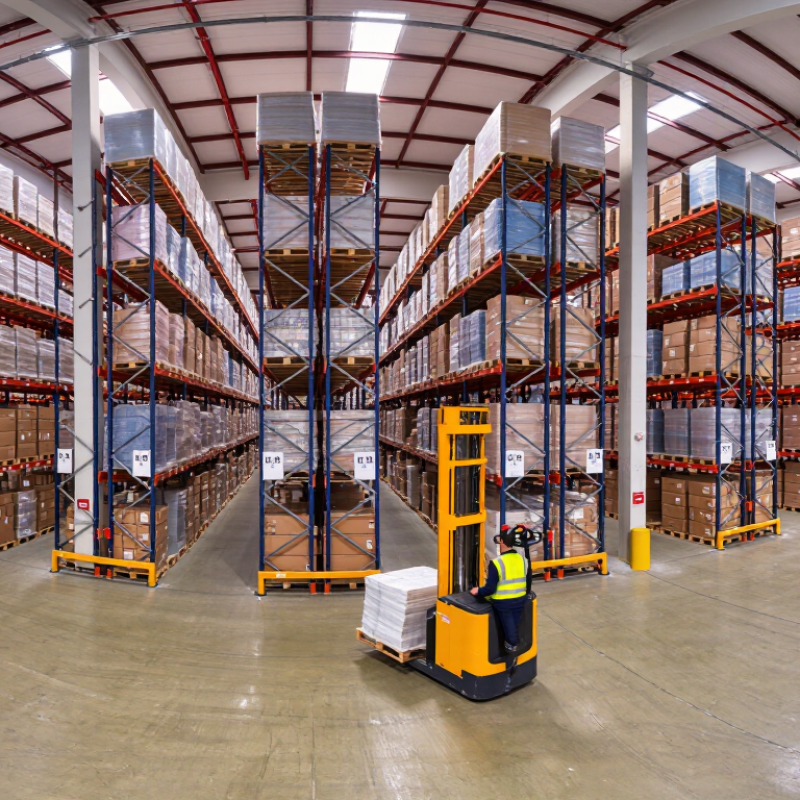
Assess Your Warehouse Needs and Inventory Profile
Before comparing rack configurations, map the work your warehouse actually performs. Record each SKU’s dimensions, weight, pallet type, and average and peak stock levels. Separate fast movers from slow movers, and note seasonal spikes. A narrow aisle may save floor space, but it can slow replenishment if lift trucks cannot maneuver safely. Measure clear height, column spacing, door locations, and floor conditions on site. A drawing is useful. It can still miss a low beam or an awkward turn.
Look at how inventory moves, not only how much you store. If workers need frequent access to individual pallets, selective rack may fit; dense storage can suit stable, high-volume items with fewer access needs. Check the number of pallet positions required during peak periods, then test that estimate against a realistic growth forecast. MHI and Deloitte’s 2024 Annual Industry Report found that 55% of surveyed supply-chain professionals planned to increase technology investment. That points to a changing operating environment, but it does not tell you which rack to buy. Your own order patterns matter more.
Walk the receiving and picking routes with a tape measure and a few representative pallets. Confirm load weights with reliable records; estimates can be wrong, and the consequences are not small. Note whether pallets vary in condition or overhang their loads. I would revisit the assumptions after a busy season, too. Forecasts are imperfect. So are spreadsheets.
Measure Available Space and Plan Rack Layout
Measure the warehouse before comparing pallet rack heights or bay widths. Record the clear floor area, ceiling height, and the lowest overhead obstruction. Include columns, door tracks, pipes, lights, sprinklers, and uneven wall lines. A tape measure and a simple sketch can catch constraints that floor plans miss. Measure twice.
Mark loading doors, pedestrian routes, emergency exits, and work areas on the sketch. Then note where goods arrive and where they leave. This helps keep rack rows aligned with actual traffic rather than an idealized drawing. Leave space for turning and staging, not just storage. Small details matter.
Choose aisle widths based on the lift truck’s turning needs and the loads it will handle. Check the equipment specifications instead of relying on a generic aisle figure. Allow for rack depth, pallet overhang, and safe clearance around beams. An aisle that looks generous on paper may feel tight once a loaded truck turns. Recheck the layout with measured dimensions on site; sketches can be wrong by a few inches, and those inches matter. Confirm floor capacity and rack load requirements with qualified professionals before installation.
How to Choose the Right Pallet Rack for Your Warehouse
Measure Available Space and Plan Rack Layout
Example space plan for a 600 m² warehouse: reserve area for rack footprints, operating aisles, staging, and clearances. Measure the usable floor area and account for doors, columns, and handling equipment before finalizing a layout. Figures are illustrative, not a design standard.
Compare Pallet Rack Types and Storage Methods
Selective pallet rack gives direct access to every pallet and suits warehouses with many product lines. Its trade-off is wider forklift aisles and lower storage density. Drive-in rack reduces aisle space by letting forklifts enter deep lanes, but it generally works best with fewer product types and last-in, first-out rotation. Drive-through lanes can support first-in, first-out movement. Push-back systems store pallets several positions deep and retrieve them from the same aisle; pallet-flow lanes use rollers to move loads toward the picking face. That matters.
Match the rack to the storage method, not just the building’s height. For fast-moving goods with consistent pallet sizes, flow lanes can keep replenishment and picking separate. For slower stock or bulk lots, deep-lane storage may make better use of floor space. MHI’s 2024 Annual Industry Report found that 55% of surveyed supply-chain leaders planned to increase technology investment. This is not a rack-performance benchmark, but it signals why future equipment and automation compatibility deserve attention. Measure actual pallet dimensions, load weights, forklift turning needs, and aisle widths before choosing. A dense layout can look efficient on paper and still slow operators down. Review the design with a qualified rack engineer; floor conditions, clearances, and load changes can alter the safe configuration. Not always.
Check Load Capacity, Equipment Access, and Safety Standards
A reliable rack choice starts with the heaviest real load, not an average estimate. Include the pallet, product, and any uneven weight distribution. Check both beam capacity per level and total frame capacity; a safe beam rating does not guarantee a safe bay. Measure every load. Confirm ratings against the rack manufacturer’s specifications and have unusual layouts reviewed by a qualified rack designer. ANSI MH16.1 provides structural design requirements for steel storage racks.
Equipment access matters just as much. Check the forklift’s turning radius, mast height, and load dimensions against aisle width and rack height. Leave room. OSHA’s material-handling rules require clear aisles and stable storage. The Bureau of Labor Statistics recorded 2,066 fatal work injuries from transportation incidents across U.S. industries in 2022; this is not a warehouse-only figure, but it underscores the risks around moving equipment. Mark pedestrian routes, protect exposed uprights, and inspect for bent beams or loose anchors. A layout can meet the numbers and still feel tight in daily use. Recheck it after equipment, pallet sizes, or traffic patterns change.
Select a Rack System That Fits Your Operations and Budget
Choosing a pallet rack begins with the work happening around it, not a catalog price. Measure your pallets, including their loads, and note how many different products need access each day. A warehouse with frequent picking may benefit from selective racks, where each pallet is easy to reach. If inventory is predictable and space is tight, higher-density storage may suit better, though it can slow access. Aisle width matters. So does forklift turning space. Leave room for safe travel and everyday handling, not just the rack frame.
Set a budget that includes installation, inspection, and possible changes as inventory shifts. A lower purchase price can mean less flexibility later. Check floor condition, ceiling height, sprinkler clearance, and the rack’s rated capacity with a qualified professional before choosing a system. These details are easy to overlook when a space looks empty. Forecasts are often wrong, too. If product sizes or turnover vary, avoid filling every available bay with a fixed layout. A modest reserve of space may cost more now, but it can make future adjustments less disruptive.