
How to Choose the Best Sodium Battery for Your Business
Choosing a Sodium Battery for a business is not a chemistry exercise alone. It is a procurement decision shaped by duty cycles, site conditions, service needs, and cash flow. A warehouse forklift, telecom backup system, and solar microgrid ask very different questions. Start with the work the battery must do: required power, usable capacity, discharge duration, daily cycling, and acceptable downtime. Small details matter. A cold loading bay, a dusty enclosure, or a narrow maintenance window can change the practical choice.
Compare complete system specifications, not headline cell figures. Review usable energy, round-trip efficiency, operating temperature range, charging limits, expected cycle life, warranty terms, and monitoring features. Ask vendors how results were measured and request test data that reflects your actual load profile. Sodium-ion designs may offer advantages in material availability or low-temperature performance, depending on the product. They may also require more space for the same stored energy than some alternatives. Do not treat a chemistry label as a safety guarantee; examine pack-level protections, installation requirements, and service arrangements. A site assessment helps. Total cost should include integration, replacement planning, energy losses, and technician training, not just purchase price.
The numbers will be imperfect. Forecasts rarely match every shift or season. Pilot the system where possible, track performance for several months, and compare it with your existing baseline. Then decide whether the Sodium Battery meets operational needs, not merely a supplier’s best-case claim.
Understanding Sodium-Ion Battery Technology and Its Business Uses
Sodium-ion batteries store and release energy by moving sodium ions between electrodes. Many designs use hard carbon for the anode, while cathode chemistry varies. That chemistry affects energy density, power output, operating temperature, and service life. Compared with lithium-ion systems, sodium-ion batteries often store less energy in the same space. For a warehouse with room for a larger battery cabinet, that may be an acceptable trade-off.
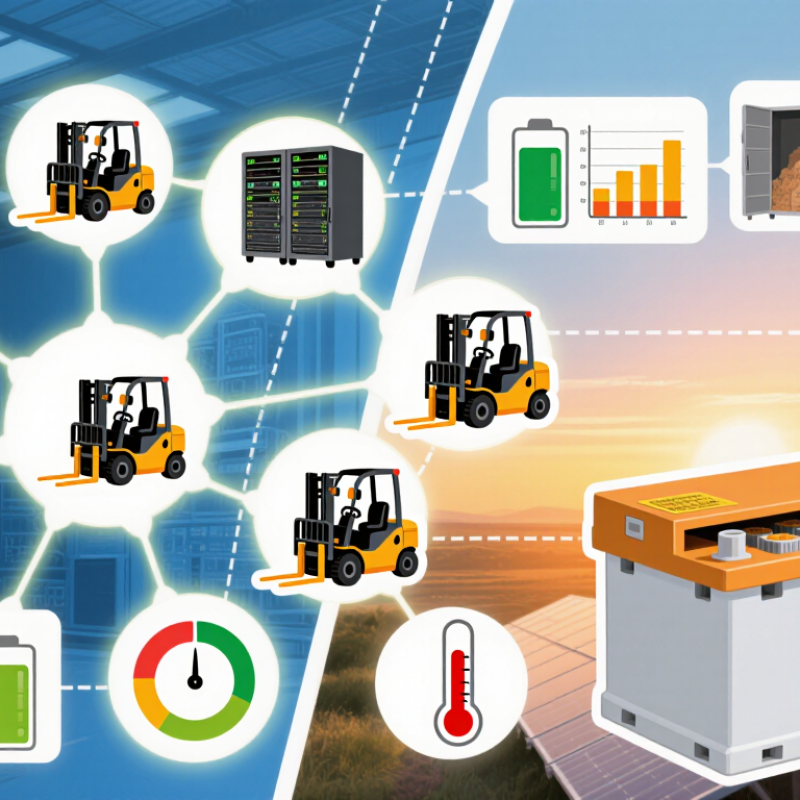
Business uses include solar power storage, backup power, and shifting electricity use away from peak-demand hours. A distribution site might charge batteries during midday solar production, then run selected equipment in the evening. That trade-off matters. Sodium is widely available, but that alone does not guarantee lower total costs. Installation, inverter compatibility, maintenance, and replacement timing also affect the business case.
Compare usable capacity, round-trip efficiency, warranted cycle life, and performance at your site’s actual temperatures. Check the battery’s footprint and ventilation needs against the proposed installation area. Ask how capacity is expected to decline over time, and what service support is included. Test it onsite. A small pilot can reveal integration issues that a spreadsheet misses, though it may not capture years of degradation. Sodium-ion technology is developing, so confirm that the supplier can provide clear test data and documented performance limits.
| Decision Factor | What to Evaluate | Typical Sodium-Ion Characteristics | Business Fit and Questions to Ask |
|---|---|---|---|
| Cathode chemistry | Identify the cathode material and the manufacturer’s cell-level performance data. | Common families include layered transition-metal oxides, Prussian blue or white analogues, and polyanion compounds. Their performance and cost profiles differ. | Ask for the exact chemistry, safety documentation, and independently verifiable test results. Do not assume all sodium-ion batteries perform alike. |
| Energy density and space | Compare cell and complete-system energy density, usable capacity, and installation footprint. | Commercial sodium-ion cells commonly have lower energy density than many lithium-ion alternatives. Published cell-level figures vary by product; roughly 100–160 Wh/kg is an indicative range, not a guarantee. | Potentially suitable where weight and space are less restrictive, such as stationary storage. Request system-level figures, including enclosure, thermal management, and power-conversion equipment. |
| Power and charge rate | Check continuous and peak power, charging limits, and performance at the expected operating temperature. | Power capability and fast-charge performance are product-specific and depend on cell design, temperature, and battery-management settings. | For backup or high-power applications, compare the supplier’s tested charge and discharge curves with your actual duty cycle. Avoid relying on a headline charge-time claim alone. |
| Cycle life | Review cycle-life testing conditions, end-of-life capacity definition, and warranty terms. | Cycle life varies widely by chemistry and operating conditions. Temperature, depth of discharge, charge rate, and reserve capacity all affect service life. | Request test data at a duty cycle close to yours, such as daily storage cycling or occasional backup use. Compare warranted energy throughput as well as cycle count. |
| Temperature performance | Establish the site’s ambient-temperature range and whether heating or cooling is required. | Some sodium-ion designs can perform well at low temperatures, but this is not universal. Permitted charging and discharging ranges depend on the specific product. | Ask for capacity, power, and charging limits across the site’s expected temperature range, plus the system’s auxiliary-energy requirements. |
| Safety and compliance | Assess cell and system safety evidence, protection systems, installation requirements, and applicable local codes. | Sodium-ion batteries are not inherently risk-free. Many use organic electrolytes, and system safety depends on cell design, controls, enclosure, and installation. | Request relevant transport, electrical, and fire-safety certifications for the exact product and configuration. Confirm emergency-response guidance with the supplier and local authorities. |
| Materials and supply chain | Review material sourcing, supplier capacity, product availability, and end-of-life arrangements. | Sodium is widely available, and some sodium-ion designs can use aluminum current collectors at both electrodes. Material choices still vary by chemistry and manufacturer. | Ask for documented sourcing and recycling plans. Sodium availability alone does not guarantee lower system cost or a secure supply of every component. |
| System integration | Check inverter compatibility, battery-management interfaces, controls, footprint, and installation requirements. | Voltage range, communication protocols, and system architecture are product-specific; compatibility should not be inferred from chemistry alone. | Obtain written confirmation that the battery integrates with your power-conversion equipment and energy-management system. Include commissioning and maintenance in the project plan. |
| Total cost of ownership | Compare installed cost, usable energy, efficiency, warranty, maintenance, and replacement assumptions. | Cell price alone does not determine project economics. Balance-of-system equipment, operating conditions, and supplier maturity can materially affect total cost. | Compare lifecycle cost per delivered unit of energy using the same project lifetime, usage profile, and financial assumptions for every option. |
| Best-fit applications | Match battery characteristics to the required duration, power, space, and operating schedule. | Potential uses include stationary storage, renewable-energy shifting, and backup applications where system-level performance meets the project requirements. | Consider other battery technologies when compact size, extensive field history, or a specific certified system is essential. Select using verified project data rather than chemistry labels alone. |
| Procurement checklist | Collect comparable technical, commercial, and service information before selecting a system. | Performance figures are product-specific; published ranges are indicative and should not be treated as guaranteed specifications. | Request a datasheet, test conditions, warranty, safety certificates, installation requirements, service plan, end-of-life options, and a project-specific performance model. |