
How to Choose the Best Sewer Line Cleaning Machine?
Choosing the right Sewer Line Cleaning Machine starts with the line, not the product brochure. A narrow residential branch with a soft blockage needs different equipment from a long run clogged with grease or roots. Pipe diameter, access points, blockage type, and distance all affect the choice. So does the worksite: a machine that fits through a basement doorway may be more useful than a larger, more powerful unit left outside.
This guide compares common options, including cable machines and high-pressure water jetters, and explains where each may be suitable. It also looks at practical details: cable or hose reach, machine weight, controls, protective features, maintenance, and access to replacement parts. Check manufacturer guidance for pipe compatibility and operating limits; aggressive tools can damage fragile or poorly maintained lines. There is no magic model. It is easy to focus on motor power and overlook setup time, cleanup, or the effort needed to transport equipment between jobs. Those details matter on a real workday. The best choice is usually the one that matches the expected work, the operator’s training, and the available service support. For recurring backups or uncertain pipe conditions, inspection by a qualified drain professional can help identify the cause before equipment is selected. A careful match saves trouble. And sometimes, the honest answer is that the blockage needs diagnosis before cleaning begins.
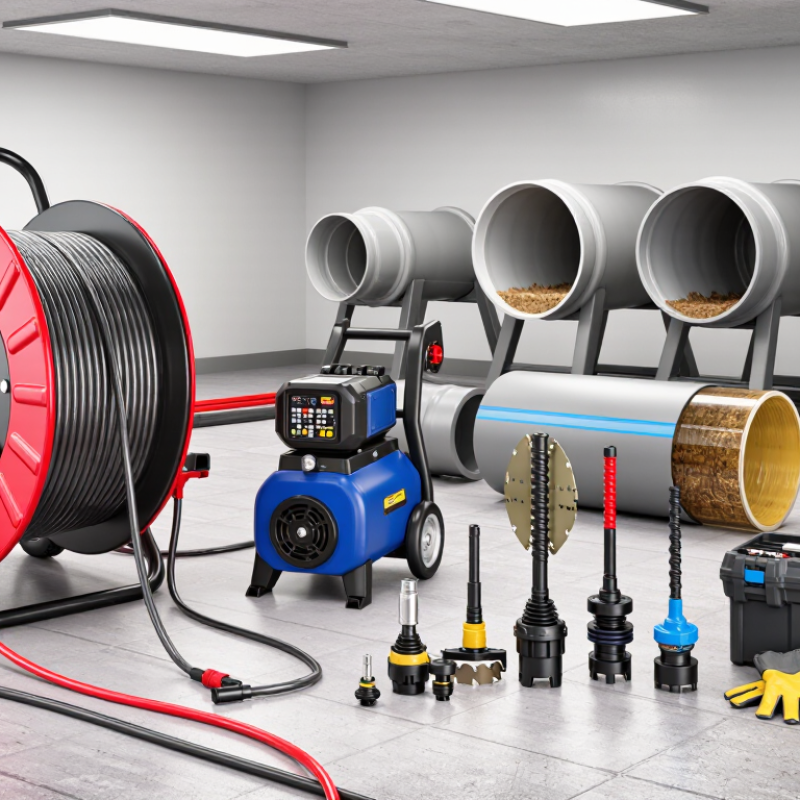
Assess the Sewer Line Cleaning Task and Its Requirements
Assess the blockage before choosing a sewer line cleaning machine. Note the pipe’s diameter, material, length, and access points. A narrow indoor drain and a long, buried line need different tools. Check whether the obstruction is grease, roots, scale, or a foreign object; each responds to different cleaning methods. A camera inspection can reveal bends, cracks, and the blockage’s location. It may not show everything, though, especially in a pipe full of water.
Match the machine’s cable or hose capacity to the pipe and the work area. A cable machine can suit many localized clogs, while water jetting may help clear loose deposits along longer runs. Follow the machine’s specified pipe-size range. Too much force can damage a fragile or already cracked line. It happens. Consider how far the machine must reach, whether power and water are available, and how easily equipment can be carried to the access point. Check that the operator can use protective gear and control the machine safely. A tool that looks powerful on paper may be awkward in a tight basement. That detail is easy to overlook.
How to Choose the Best Sewer Line Cleaning Machine? - Assess the Sewer Line Cleaning Task and Its Requirements
| Cleaning Task | Pipe and Access Conditions | Typical Blockage or Material | Suitable Machine Type | Key Requirements to Assess |
|---|---|---|---|---|
| Clear a routine household drain blockage | Small branch drain, usually about 1.5–4 in. in diameter; access through a cleanout or fixture opening | Hair, soap residue, grease, or soft organic buildup | Compact drum-style or sectional cable machine | Check that the cable diameter and cutter fit the pipe. Consider cable reach, portability, and safe access to the cleanout. |
| Clean a longer building drain or service line | Longer run with one or more bends; diameter and length should be confirmed before selecting equipment | Accumulated grease, sludge, roots, or recurring soft blockages | Professional drum or sectional cable machine; a water jetter may be appropriate for suitable lines | Estimate the run length and identify bends, cleanout locations, and pipe condition. Choose enough cable or hose reach without exceeding the equipment’s rated capacity. |
| Remove roots from a sewer lateral | Accessible lateral with a confirmed pipe diameter and known or estimated root intrusion location | Fine or established roots entering through joints or damaged sections | Rotary cable machine with a correctly sized root-cutting head; follow-up jetting may help remove loose debris | Inspect the line where possible. Cutting roots clears an obstruction but does not repair the entry point; damaged pipe may need further assessment. |
| Flush grease, sediment, or loose deposits | Line and access point suitable for water flow and hose insertion | Grease, sludge, sand, and other loose material | High-pressure water jetter selected for the pipe and task | Compare pressure and flow specifications, hose reach, nozzle type, and water supply. Confirm that the pipe can safely tolerate jetting. |
| Clean a larger building sewer or municipal line | Larger-diameter line; may require access through a manhole or dedicated cleanout | Heavy sediment, scale, roots, or deposits over a longer distance | Heavy-duty jetting equipment or a suitable large-capacity mechanical cleaning machine | Assess pipe diameter, distance, deposit severity, water and power availability, debris handling, and the space needed to position the equipment. |
| Work in a confined or difficult-to-reach location | Restricted indoor access, stairs, narrow passages, or limited clearance around the cleanout | Varies by pipe and blockage | Compact, portable machine matched to the pipe diameter and required reach | Check machine weight, footprint, cable or hose handling, electrical supply, ventilation, and safe operator positioning before mobilizing. |
| Choose equipment when pipe condition is uncertain | Unknown material, age, diameter, bends, or structural condition | Unknown or recurring blockage | Begin with line assessment; select a cable machine or jetter only after confirming suitability | Use a camera inspection when appropriate. Avoid aggressive cutters or high-pressure cleaning until the pipe’s condition and limitations are understood. |