
7 Best HDPE Floaters for Global Buyers in 2026
Hdpe Floaters support aquaculture cages, floating docks, pipelines, and other buoyant systems. Choosing well is not just a matter of size or price. Buyers need to check buoyancy, wall thickness, UV resistance, joint design, and the conditions at the installation site. Salt spray, repeated impacts, and changing water levels can expose weaknesses quickly.
Demand context is growing. FAO’s The State of World Fisheries and Aquaculture 2024 reports that global fisheries and aquaculture production reached 223.2 million tonnes in 2022. Aquaculture accounted for 130.9 million tonnes, including aquatic animals and algae. These figures do not measure floater sales, but they show the scale of infrastructure supporting aquatic production. Plastics Europe’s Plastics – the Fast Facts 2024 estimates global plastics production at 413.8 million tonnes in 2023. That broad figure is useful context, not proof that every HDPE product performs equally.
This guide compares seven options for global buyers using practical criteria: material quality, design, load capacity, durability, customization, documentation, and supplier support. Specifications should be checked against real project requirements, not marketing claims alone. Ask for test data, drawings, and clear warranty terms. Then review how the floaters will be shipped, connected, and maintained.
No model suits every shoreline. That matters. A compact floater may work well in sheltered water yet prove inadequate under heavier loads or rougher conditions. The shortlist below is a starting point, not a substitute for engineering review.
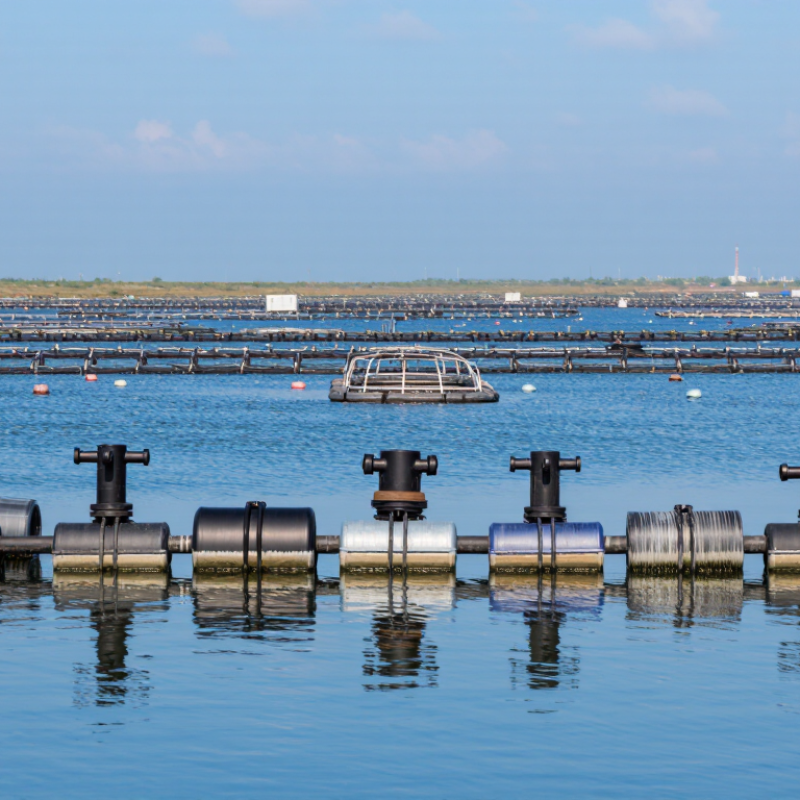
What HDPE Floaters Are and How They Function
HDPE floaters are hollow modules made from high-density polyethylene. Their sealed cavities displace water, creating buoyant support for floating walkways, work platforms, or utility lines. Many designs connect through molded joints or external fasteners, allowing sections to form a larger surface. The plastic resists moisture and many common forms of corrosion, but it can still wear from sunlight, impact, or abrasion.
The basic function is simple: the floater pushes water aside, and the displaced water supports its weight. Add people, equipment, or cargo, and the module sits lower in the water. Too much load can reduce freeboard and make a platform less stable. That is the principle. In practice, performance also depends on shell thickness, internal structure, connection quality, and how loads are spread across the assembly. I’ve seen specifications look adequate on paper while real site conditions were easy to underestimate.
Tips: Check rated load, dimensions, joint details, and UV protection before selecting floaters. Leave a sensible safety margin, and inspect seams and fasteners regularly. A small leak can matter. Consider waves, changing water levels, and contact with sharp edges at the installation site.
How HDPE Floater Designs Differ by Application
HDPE floaters should be selected by load pattern, water conditions, and maintenance access—not by shape alone. For aquaculture cages, connected floats need enough reserve buoyancy to support nets, workers, and harvest loads while limiting flex at joints. The FAO’s The State of World Fisheries and Aquaculture 2024 reports 130.9 million tonnes of aquatic animal production in 2022. That scale makes reliable access and stable cage support practical design concerns. Small details matter: a rough weld, exposed edge, or poorly placed connector can complicate routine inspection.
Dock and marina floats face different demands. Wide, compartmentalized modules can provide a steadier walking surface, while utility floats may prioritize compact dimensions and easy handling. Floating pipelines need buoyancy distributed along the line, with attachment points arranged to reduce local stress. The Plastics Pipe Institute’s Handbook of Polyethylene Pipe gives a typical HDPE density range of about 0.941–0.965 g/cm³; actual floater performance still depends on wall thickness, geometry, and ballast. Check the rated load and connection details. Test the fit in real conditions. A specification sheet cannot predict every wave pattern, and designs sometimes need adjustment after installation.
Key Criteria for Comparing HDPE Floaters in 2026
A reliable comparison starts with the job site, not the product photo. Check each floater’s rated buoyancy against the loaded structure, including cables, fittings, and maintenance equipment. Leave a practical reserve; operating close to maximum capacity can reduce stability in changing water conditions. Compare dimensions and wall thickness, too. Ask whether thickness is a nominal value or a measured production tolerance.
Material quality matters. Request clear details on resin grade, UV stabilization, and expected performance in local temperatures. Inspect sample seams for even fusion, without gaps or rough, brittle edges. Fittings should resist corrosion and match the intended anchoring method. One specification sheet can still be misleading, so verify test methods and warranty limits before comparing prices. Small details matter.
Tips: Ask for buoyancy and load-test records, plus installation guidance. Check how damaged units can be inspected and repaired. If two options look similar, compare their documented service life and replacement costs, not just purchase price. A low upfront cost may not stay low.
Seven HDPE Floater Options for Global Buyers
Global buyers can compare seven HDPE floater options by load, water conditions, and installation method. Solid-core floats resist dents and suit exposed work areas, though they can be heavy to handle. Hollow rotomolded floats are lighter and useful for docks or aquaculture lines; inspect wall thickness and sealing quality. Modular cube floats create flexible platforms and are easy to replace in sections. Cylindrical floats fit narrow channels and rope systems. Pontoon-style units support broader walkways but need suitable anchoring. Mooring floats with reinforced attachment points suit line management. Marker floats improve visibility around nets, pipes, or work zones. Details matter.
Material choice is only part of the decision. The OECD’s Global Plastics Outlook (2022) estimates that 353 million tonnes of plastic waste were generated worldwide in 2019, while only 9% was recycled. Buyers should therefore ask about repairability, UV protection, and end-of-life handling, not just purchase price. UNCTAD’s Review of Maritime Transport 2024 reports that more than 80% of world trade by volume moves by sea, making compact, stackable designs practical for international shipping. A caveat: the toughest floater is not always the right one. Oversizing can raise freight costs, and even a well-specified float can fail if its load rating or anchoring is overlooked.
7 Best HDPE Floaters for Global Buyers in 2026 – Seven HDPE Floater Options for Global Buyers
| HDPE Floater Option | Typical Form | Common Applications | Key Selection Checks | Practical Advantage |
|---|---|---|---|---|
| Rotomolded sealed float | Hollow, molded body with sealed or closable access points; shape and dimensions vary by design. | Floating platforms, marine equipment, work pontoons, and general-purpose flotation. | Confirm wall construction, buoyancy at the intended draft, closure and leak-test method, UV stabilization, and attachment points. | Can be molded into shapes suited to a specific frame or installation. |
| HDPE pipe float | HDPE pipe used as a buoyant member, either sealed at the ends or incorporated into a designed floating assembly. | Floating walkways, barriers, small platforms, and structural float frames. | Check pipe dimensions and wall thickness, end closures, joint design, external loads, and whether the assembly is engineered for flotation. | Pipe is widely used in water infrastructure and can form continuous or modular float structures. |
| Dredging pipeline float | Two-piece or multi-piece float shell secured around a discharge or suction pipeline. | Supporting floating dredging pipelines and other hoses or pipes on water. | Match the internal fit to the pipe or hose outside diameter; verify spacing, fastening, wear resistance, and buoyancy under the full loaded condition. | Designed to keep a pipeline at the water surface while allowing it to be assembled along the line. |
| Aquaculture cage float | Buoyant HDPE pipe ring or purpose-built float supporting a net cage and associated equipment. | Fish-farming cages and other floating aquaculture installations. | Assess cage size, net and equipment loads, site waves and currents, mooring loads, pipe connections, and maintenance access. | Can be integrated with cage structures and mooring arrangements for continuous water-based use. |
| Modular floating-dock unit | Interlocking hollow modules assembled into a platform or walkway. | Marinas, access walkways, temporary work platforms, and recreational docks. | Check the rated load for the complete assembled system, connection strength, slip resistance, anchoring, and local safety requirements. | Modules can be assembled into different layouts and replaced individually when the system allows. |
| Marker or navigation buoy | Float body designed to carry a visible marker, light, reflector, or other signaling equipment. | Waterway marking, aquaculture boundary marking, and work-zone identification. | Specify visibility, topmark or light mounting, anchoring loads, color requirements, freeboard, and local navigation rules. | Provides a dedicated floating platform for identification and signaling equipment. |
| Floating barrier or boom float | Buoyant HDPE body or float elements integrated into a barrier or containment system. | Floating booms, debris barriers, and selected containment applications. | Confirm compatibility with the barrier material, connected loads, site currents and waves, anchoring, and the intended containment purpose. | Can provide buoyancy along a barrier while allowing the overall system to be configured for the site. |
Buying note: HDPE resin density is commonly around 0.93–0.97 g/cm³, but the finished floater’s capacity depends on its external displacement, wall thickness, internal construction, fittings, and operating conditions. Request the manufacturer’s rated buoyancy and load data for the complete configuration; do not treat a generic shape or material value as a product load rating.
How to Verify Quality, Compliance, and Supplier Reliability
A dependable HDPE floater starts with traceable material, not a polished product sheet. Plastics Europe’s Plastics – the Fast Facts 2023 reports 400.3 million tonnes of global plastics production in 2022. That figure describes a vast market, not consistent quality. Ask suppliers for resin grade, batch identification, and certificates of analysis, then check that sample test results match the production batch.
Paper is not proof. Request test methods and results for density, tensile strength, impact resistance, and UV ageing. ASTM methods can help define repeatable tests, but the test conditions should reflect the floater’s intended water, sunlight, and load exposure. Inspect welds for gaps and uneven beads; measure wall thickness at several points. A sample that performs well in a brief demonstration may still fail after months of sun and repeated loading.
Verify the stated buoyancy against the floater’s dimensions and rated load, and ask how leakage is detected. For compliance, request the applicable standards and written evidence for the destination market; a generic certificate may not cover the finished product. Check factory audit records, production capacity, lead times, warranty terms, and access to replacement fittings. One detail buyers sometimes overlook: confirm that drawings, test reports, and delivered units use the same specifications. Even then, independent pre-shipment inspection is worth considering.
7 Best HDPE Floaters for Global Buyers in 2026
A practical quality, compliance, and supplier-reliability check for procurement teams.
Material reference: HDPE commonly has a density of approximately 941–965 kg/m³. This is a representative material range, not a product acceptance limit. Confirm the exact resin grade and test results with the supplier; density can be measured using methods such as ASTM D1505 or ISO 1183-1.
Seven checks before buying: resin grade and traceability; density and mechanical test reports; UV-resistance evidence; buoyancy and load calculations; dimensional and weld inspection; applicable market-specific compliance documents; and factory audit, references, and warranty terms.
Density alone does not establish floater quality. Verify test methods, report dates, sample identification, and the product’s intended operating conditions.
