
2026 Best Traditional Lighting Types for Global Buyers
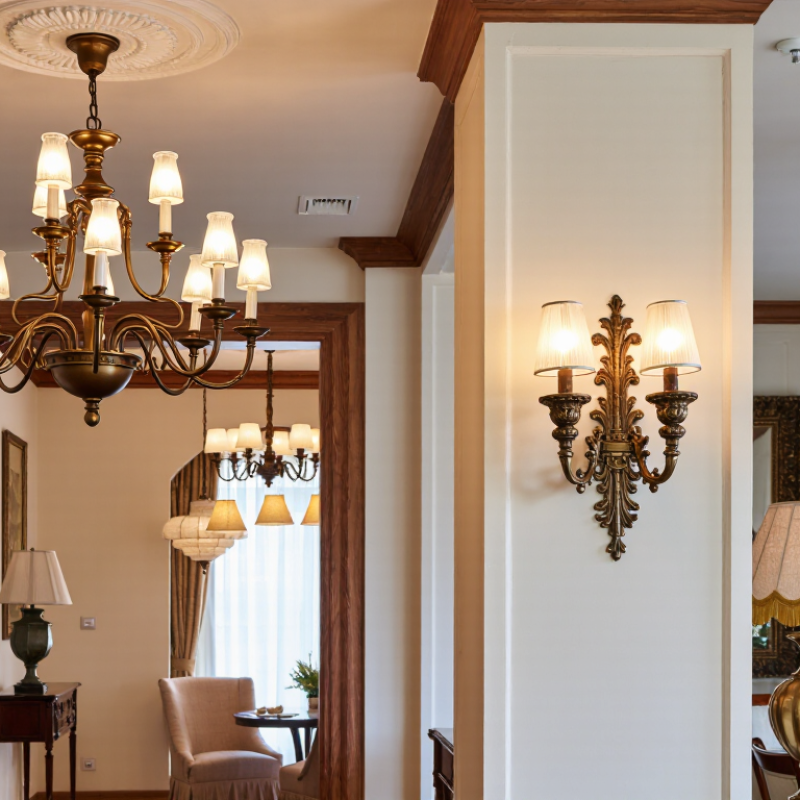
Traditional Lighting remains a strong choice for global buyers seeking warmth, craftsmanship, and lasting visual appeal. In 2026, classic chandeliers, lanterns, wall sconces, pendant fixtures, and table lamps will continue shaping residential and commercial interiors. Their value extends beyond decoration. A hand-finished brass frame, textured glass shade, or linen lampshade can create a more welcoming atmosphere than a purely functional fixture.
This guide examines the best Traditional Lighting types for different markets, room sizes, budgets, and design preferences. It considers materials, light distribution, maintenance, installation, and supplier reliability. Buyers should check voltage, socket standards, dimming compatibility, and local safety certifications before placing an order. These details often decide whether an attractive fixture performs well in practice. A warm 2700K lamp may suit a dining room, while a brighter setting can improve reading areas and workspaces.
Style alone is not enough. It can be tempting.
Experienced buyers also inspect welds, surface coatings, wiring quality, packaging, and replacement-part availability. Photographs may hide uneven finishes or fragile components. That is why product samples, technical drawings, and clear warranty terms deserve careful attention. Sustainable sourcing also matters, especially when fixtures use timber, brass, leather, or antique-inspired finishes. Not every traditional design fits every market, and that limitation deserves honest consideration. The right choice balances heritage character with safe installation, dependable performance, and practical long-term value.
What Traditional Lighting Means and Why It Still Matters in 2026
Traditional lighting in 2026 means more than ornate fixtures or warm-colored bulbs. It describes lighting shaped by familiar forms: pendant lanterns, shaded table lamps, wall sconces, and balanced ceiling fixtures. Buyers still value these designs because they make rooms feel settled, not temporary. In a dining room, a bronze-toned pendant can soften a long table. In a hotel corridor, repeated sconces can create rhythm and visual comfort. Materials matter too. Glass clarity, metal weight, socket quality, and heat management often reveal more than decoration.
From practical sourcing experience, traditional lighting works best when its style matches local architecture and daily habits. A buyer in a humid coastal region may need corrosion-resistant finishes. A household with low ceilings may prefer compact flush mounts over hanging chandeliers. Energy performance also matters in 2026. Check LED compatibility, dimming behavior, color temperature, and replacement access. Warm light around 2700–3000K often supports a classic atmosphere, but every room differs. Some traditional fixtures look beautiful in photographs yet feel too dim at home. That is an easy mistake.
Tips: Request installation dimensions, wiring details, photometric data, and finish samples before ordering. Ask how the fixture performs after extended use, not only how it looks new. Review regional safety requirements with a qualified professional. Traditional does not always mean practical. Good judgment remains necessary.
2026 Best Traditional Lighting Types for Global Buyers
What Traditional Lighting Means and Why It Still Matters in 2026
| Lighting Type | What It Means | Typical Efficacy | Typical Life | Color Quality | Main Advantages | Main Limitations | Best-Fit Applications in 2026 |
|---|---|---|---|---|---|---|---|
| Incandescent | A heated tungsten filament produces warm visible light. | Approximately 10–17 lm/W | About 750–2,000 hours | CRI typically 100; warm 2,400–3,000 K | Natural color rendering, instant start, simple dimming, familiar appearance. | High energy consumption, substantial heat output, short service life, and increasing efficiency restrictions in many markets. | Heritage interiors, museums, theatrical settings, decorative fixtures, and markets where permitted. |
| Halogen | A compact incandescent lamp filled with halogen gas to improve filament performance. | Approximately 15–25 lm/W | About 2,000–4,000 hours | CRI typically 100; warm to neutral white | Excellent color rendering, focused beam options, instant start, and smooth dimming. | Runs hot, uses more electricity than modern LED alternatives, and may be restricted for general lighting. | Accent lighting, retail displays, hospitality interiors, galleries, and retrofit spotlights. |
| Compact Fluorescent Lamp | An electrically excited gas discharge lamp that uses phosphors to create visible light. | Approximately 50–70 lm/W | About 6,000–15,000 hours | CRI commonly 80–90 | More efficient than incandescent lamps and available in familiar screw-base formats. | Contains a small amount of mercury, requires proper recycling, may have warm-up time, and is gradually being replaced by LED. | Existing retrofit installations, utility-conscious replacement projects, and regions where stock remains available. |
| Linear Fluorescent | A long tubular gas-discharge lamp operated with a ballast. | Approximately 60–100 lm/W | About 12,000–36,000 hours | CRI commonly 80–90 | Uniform illumination, good efficiency, and broad availability of legacy fixtures. | Requires ballast compatibility, contains mercury, and faces phase-outs or reduced availability in some jurisdictions. | Existing offices, workshops, schools, warehouses, and planned retrofit programs. |
| Metal Halide | A high-intensity discharge lamp using an electric arc in a pressurized metal-halide filling. | Approximately 75–125 lm/W | About 6,000–20,000 hours | CRI commonly 65–90, depending on lamp design | High light output, useful beam control, and strong performance for large spaces. | Warm-up and restrike delays, high operating temperature, ballast requirements, and maintenance needs. | Sports facilities, high-bay spaces, industrial areas, and legacy architectural floodlighting. |
| High-Pressure Sodium | A high-intensity discharge source that produces light mainly through sodium vapor. | Approximately 80–150 lm/W | About 12,000–24,000 hours | Often low to moderate CRI; yellow-orange appearance | High luminous efficacy, long life, and reliable outdoor operation. | Poor color discrimination, warm-up time, ballast dependency, and declining suitability for people-focused spaces. | Legacy roadway, security, industrial, and outdoor area-lighting installations. |
| LED Filament / Vintage-Style LED | A solid-state LED source designed to imitate the appearance of traditional filament lamps. | Approximately 80–120 lm/W | About 15,000–50,000 hours | CRI commonly 80–95; typically 1,800–3,000 K for vintage styles | Lower energy use, long service life, low heat relative to incandescent, and broad shape options. | Dimming quality depends on the driver and control system; decorative designs may provide less light per lamp. | Restaurants, hotels, residential interiors, heritage-style fixtures, retail displays, and export retrofit programs. |
| LED Candle and Flame-Effect Lamp | An LED product shaped or programmed to reproduce the appearance of a candle or flame. | Approximately 50–110 lm/W | About 15,000–40,000 hours | CRI commonly 80–95; warm 1,800–3,000 K | Flame-like ambience without an open flame, low maintenance, and suitable for enclosed decorative fixtures. | Usually intended for decorative rather than high-output lighting; visual flame effects vary by product. | Hospitality, event venues, religious spaces, restaurants, residential décor, and safety-sensitive environments. |
| Oil Lamp and Candle | An open-flame light source using liquid fuel or wax rather than an electrical system. | Not normally rated in lumens per watt for commercial comparison | Consumable; depends on fuel, wick, and operating conditions | Warm, low-intensity flame with natural visual variation | Authentic historical character, operation without a grid connection, and strong ceremonial value. | Fire risk, smoke and soot, ventilation requirements, frequent replenishment, and strict safety considerations. | Ceremonial use, cultural heritage, emergency preparedness, outdoor hospitality, and decorative applications under supervision. |
| Buyer note: Performance values are typical industry ranges rather than guaranteed specifications. Actual results depend on wattage, operating temperature, ballast or driver quality, voltage, dimming method, installation conditions, and regional regulations. Before importing, verify the required safety marks, photometric documentation, voltage and frequency compatibility, recycling obligations, and energy-efficiency rules in the destination market. | |||||||
Related Posts
-
Illuminate Your Space with Accent Lighting Ideas That Transform Your Home
-
Why Choose Energy Efficient House Lighting?
-
Understanding Accent Lighting Production Standards for Global Buyers
-
How to Choose the Best LED Lighting for Your Needs?
-
Top 10 Benefits of Using LED Fixtures for Your Lighting Needs?
-
World Class Chinese Manufacturing for Your Ultimate Commercial Lighting Supply Needs